
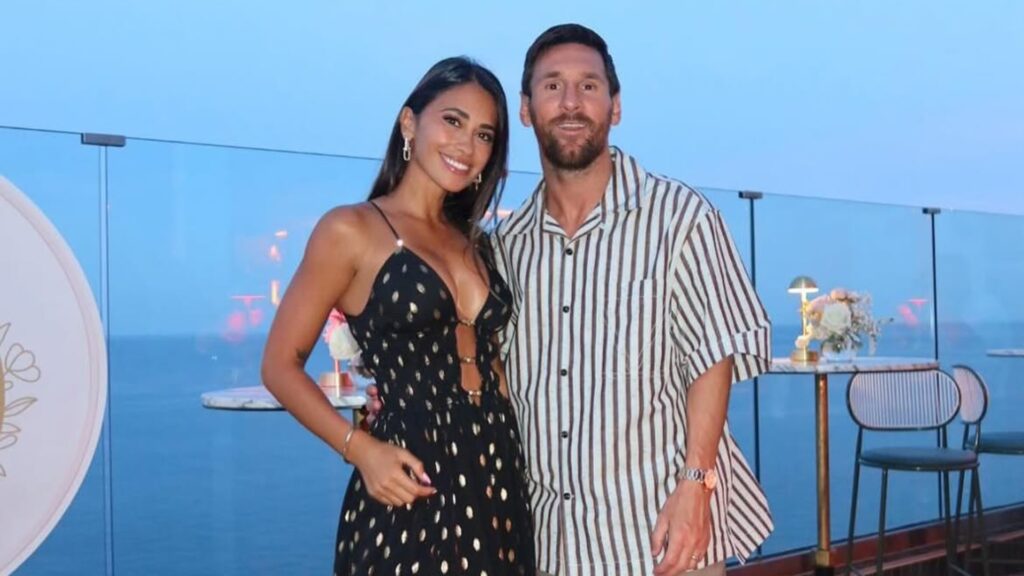
Captured in the stands during the FIFA World Cup 2026™, the lives of footballers’ partners often play out in the glossy pages of tabloids, where their identities seem eclipsed by the shadow of their famous spouses. Dubbed as the “WAGs” (Wives and Girlfriends), these women frequently exist without distinction or recognition, suffering the burdens of public scrutiny that see them portrayed more as accessories to their partners’ fame rather than as individuals in their own right. They face a relentless onslaught of sexist judgments that perpetuate stereotypes and reduce their presence to mere spectacle.
The scrutiny faced by footballers’ partners
As the 2026 World Cup unfolds across our screens and nears its climax, the spotlight does not merely shine on the players. It often flickers onto the partners of these athletes—these “women of,” who appear to thrive only in the greatness of their companions yet find themselves inadvertently at the center of attention. Tabloids dedicate front-page space to the ones who captivate the hearts of these athletes, labeling them as “lucky” or “privileged.” The scrutiny they endure mirrors the pressure experienced by the players themselves during a championship match, leaving little room for them to err.
While their partners chase the ball and execute pivotal plays, these women engage in a different kind of contest—the battle for their image. Instead of defending goals, they are tasked with defending their dignity in an environment that often seeks to undermine them, branding them as impostors or extras in someone else’s story. Gossip hounds seem more interested in the latest dinner plans or the cost of a diamond engagement ring than in the athletic achievements of the men they accompany.
Recently, Ester Exposito, partner of French international footballer Kylian Mbappé, faced a barrage of vitriol for sharing a dance for mere seconds with Bad Bunny. Fans of her partner—dubbed “the man of the moment” by the press—spontaneously accused her of infidelity. Back in 2006, during the World Cup, Victoria Beckham, the face of the “WAGs,” endured a similar wave of disdain, as tabloids suggested she was to blame for England’s poor performance, claiming that she distracted the players. It was merely a taste of the judgment that frequently befalls these women.
The lingering stereotype of the gold digger
No matter their actions or words, footballers’ partners are often reminded that they don’t measure up to their numbered counterparts. These women are expected to “earn” their status, existing primarily as showcases or fantasies, and their affection is inspected by strangers who deem it “self-serving.” To many, these women are seen as possessing shallow dreams, driven solely by wealth and status.
Georgina Rodriguez, partner of Portuguese star Cristiano Ronaldo, has often been portrayed as a “gold digger.” However, in her Netflix docuseries “I Am Georgina,” she reclaims her narrative, revealing a self-made empire and a personal fortune valued at over $10 million. While that’s notably less than her partner’s estimated billion-dollar fortune, it is nevertheless sufficient for her independence and future security.
Despite the stereotype of the money-hungry woman, many of these partners actually earn more than professional female footballers, who often see salaries a fraction of what their male counterparts make. WAGs ignite curiosity, fascination, and rumors, while female athletes grapple for recognition and respect.
The target of relentless sexism
As both “trophy wives” and “objects,” these women often lose ownership of their own bodies and images. The tabloid press frequently reduces them to their looks, showcasing exclusive beach outing photos, while male peers view them as mere distractions. According to media portrayals and viral commentary, the identities of footballers’ partners frequently dissolve into a silhouette, a visage, a label.
When they opt for modest attire, like Rima Edbouche, wife of French international player Ousmane Dembélé, or maintain a low profile like Antonela Roccuzzo, Messi’s partner, they face backlash online. Conversely, when they express ambition beyond their partners, achieving recognition or sharing selfies, they are deemed “superficial.”
In this unforgiving arena, which reinvokes archaic sexist principles, footballers’ partners receive no reprieve. Frequently pitted against each other, as exemplified in the infamous “Wagatha Christie” affair, and subjected to hypersexualization, they carry the weight of stereotypes and sexism, their partners’ national colors overshadowed by oppressive societal constructs.
The beauty standard marketplace
While players become scrutinized by selectors during their careers, the partners of footballers also navigate rigid standards to earn their prestigious roles. Fans often have higher expectations for these women than for the athletes themselves, who are usually granted excuses for poor performances due to fatigue, injuries, or inclement weather. An idealized image accompanies them: youth, slimness, and impeccable adherence to aesthetic norms.
When they fail to fit this narrow mold, they can find themselves ruthlessly attacked. Lauren Fryer, the partner of Arsenal star Declan Rice, faced an onslaught of fatphobic remarks so severe that she decided to withdraw from social media. Branded as “not pretty enough” for a man of his stature, as if beauty is a woman’s sole value, Lauren’s experience highlights the harsh casting call imposed on footballers’ partners.
Many fans aspire to take the place of footballers’ partners, gaining front-row seats at matches yet also attracting sexist remarks. Ultimately, these women act as a defensive shield, enduring the blows of misogynistic critiques and emerging as prime targets in a game where prejudice always appears to play on home turf.
