
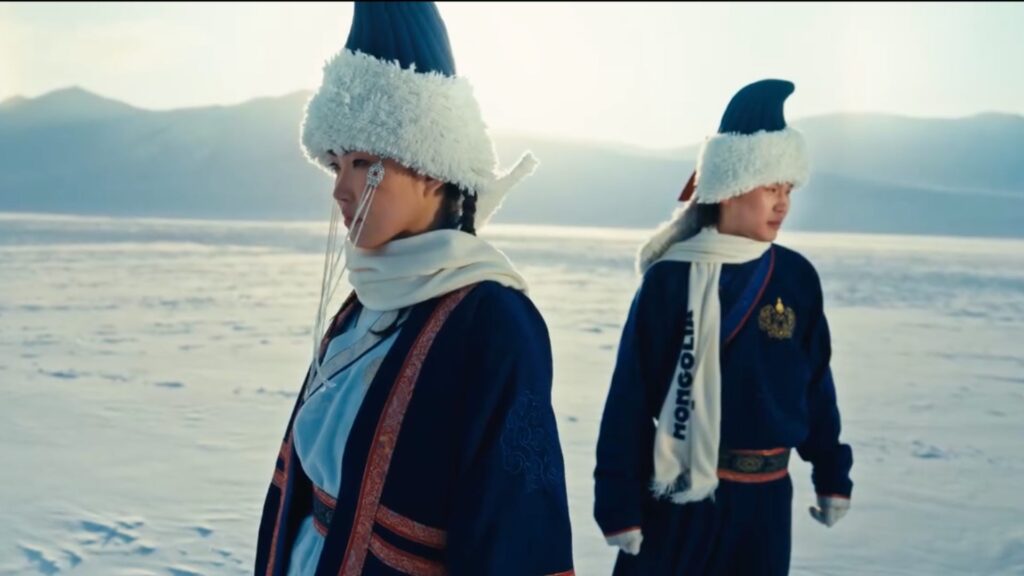
As the countdown begins for the Winter Olympics 2026 in Milan and Cortina d’Ampezzo (February 6-22, 2026), Mongolia is garnering significant attention, well ahead of the first competitions. The official outfits of its delegation have sparked a social media frenzy, celebrated for their striking aesthetics and deep cultural roots.
A Design Inspired by Mongolian History
The ceremonial attire unveiled by the Mongolian Olympic Committee, crafted by the local brand Goyol Cashmere, draws inspiration from the traditional garments of the Great Mongol Empire (13th-15th centuries). The silhouette recalls the deel, the traditional clothing of nomadic peoples, reimagined in a contemporary style featuring an elegant cut, a high collar, and mobility-enhancing openings.
View this post on Instagram
Materials and Symbolism at the Heart of the Design
These outfits are not just visually appealing; they are made from Mongolian cashmere, an emblematic material well-suited for the harsh winters, adorned with silk finishes and symbolic traditional embroidery. Every detail, from the protective collar to the intricate motifs, highlights local craftsmanship while narrating a powerful cultural story.
A Complete and Cohesive Collection
Alongside the more formal ceremonial pieces, a casual line inspired by alpine sweaters has also been introduced, featuring designs that evoke nomadic life and traditional Mongolian yurts. This balance of tradition and modernity resonates throughout the collection, which has been thoughtfully designed for comfort, everyday use in the Olympic village, and a connection to the winter environment.
View this post on Instagram
A Cultural Presence Noted on Social Media
Since their unveiling, these outfits have created a significant buzz on social media, garnering enthusiastic reactions for their bold visual identity and their ability to blend historical heritage with contemporary aesthetics. For many, they signify that the Olympics have evolved into a platform for cultural expression as much as a sports event.
The Significance of Such Choices Ahead of Competitions
While Mongolia’s participation in Milano-Cortina 2026 does not uniquely prioritize medal standings, these outfits enable the delegation to distinguish itself in another way—by asserting a strong identity on the international stage.
Beyond their elegance, these outfits embody a genuine image strategy for Mongolia, turning its Olympic participation into a cultural showcase. By intertwining historical heritage, textile craftsmanship, and modernity, the Mongolian delegation reminds us that the Olympic Games also serve as a venue for identity expression, allowing each nation to shine long before the sporting events begin.
