
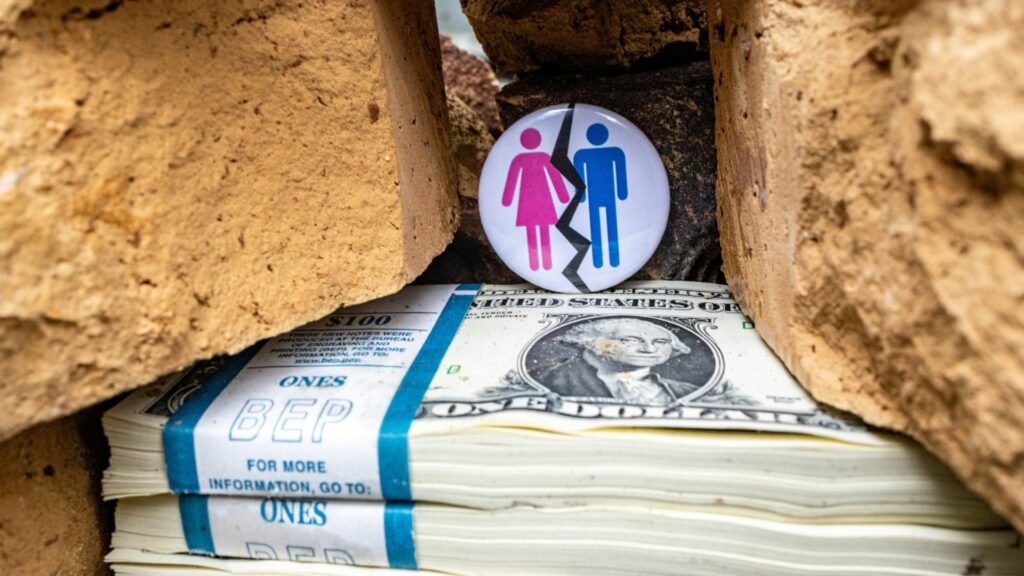
It is often said that women are extravagant spenders. However, when they find themselves in the red at the end of the month, it’s not due to impulsive purchases made during aimless window shopping, but rather the broader societal expectations tied to their gender. Subject to the infamous “pink tax” that inflates prices for products intended for women, they must constantly dig into their wallets. The financial burden of being a woman is real and significant.
The Pink Tax: A Silent Discrimination
Old stereotypes claim that women are not meant to manage finances; they squander their money on trivial goods and indulge without restraint. These sexist beliefs suggest that women can’t resist the allure of every shop window along their path and have no concept of budgeting. After all, it is a well-known cliché that women lack mathematical prowess. Yet, in reality, these women are far from mismanaging their bank accounts.
When they occasionally find themselves overdrawn, it is not due to splurging on a pair of designer heels or a trendy handbag. Rather, it is a direct result of economic discrimination. They are victims of the pink tax, which compels them to pay more for a haircut or shampoo packaged in a so-called gender-specific style that promises lustrous, flowing hair.
Consequently, under the weight of this tax, which starkly illustrates economic inequalities, women end up spending more than men for equivalent services or products. For example, a razor designed with more aesthetically pleasing features and a “feminine” color may be several cents more expensive than its male counterpart. Similarly, the price of dry cleaning and haircuts varies, often favoring men. Women are left to bear the financial consequences of societal dictates while earning, on average, 21.8% less than their male counterparts.
The Cost of Menstruation: An Affordability Crisis
While most contraceptive methods are reimbursed, menstrual hygiene products impose a financial strain on women. These essential items can be quite costly, especially for those who seek organic materials that are gentle on their bodies. They are forced to pay a premium for a biological reality they did not choose. Estimates suggest that menstruation costs around €675 annually, totaling approximately €23,500 over a lifetime. With such an amount, women might purchase a new car, pay off a mortgage, or even pursue their dream of starting a business.
Numerous organizations are stepping in to distribute sanitary products for free, similar to how others provide meals, highlighting the notion of privilege. Furthermore, the additional expenses incurred due to menstrual symptoms—such as heating pads, comforting blankets, and patches—are often not covered by health insurance.
Expenses Related to Safety
Going out at night can take a toll on a woman’s budget, not solely due to ordering endless cocktails or shared platters, but due to their reliance on taxis instead of public transport, which they pay for monthly. This is not a “princess” fantasy, as some men might claim, but a practical choice to ensure their safety. In large cities, a taxi ride can easily cost around €30, which adds up significantly.
Women, faced with hostile urban environments, often choose to live in safer neighborhoods where rent is considerably higher. Many invest in self-defense classes, not for enjoyment, but as a precautionary measure. They also spend more on pepper spray than on expensive perfumes, opting for personal safety tools like alarms and sharp keychain accessories instead of makeup products.
The Maternal Penalty
In the professional world, men are often seen as the “kings.” They enjoy better recognition and ample opportunities for advancement, while women feel as though they are on the edge of their seats. When a woman becomes pregnant, it can feel like a “return to square one.” According to the National Institute for Demographic Studies (Ined), the arrival of a first child results in women losing 30% of their income long-term.
When combining the pink tax, menstrual costs, safety expenses, and maternal penalties, the conclusion is clear: being a woman is financially burdensome. These are not frivolous purchases or unnecessary expenses, but rather costs imposed by society and gender norms—silent yet persistent.
The true luxury for women would be to live without these imposed charges. A more equitable society would start by recognizing these invisible costs and alleviating the daily burdens. For every cent spent, there is less financial freedom, reduced autonomy, and a constant reminder of the enduring inequalities at play.
