
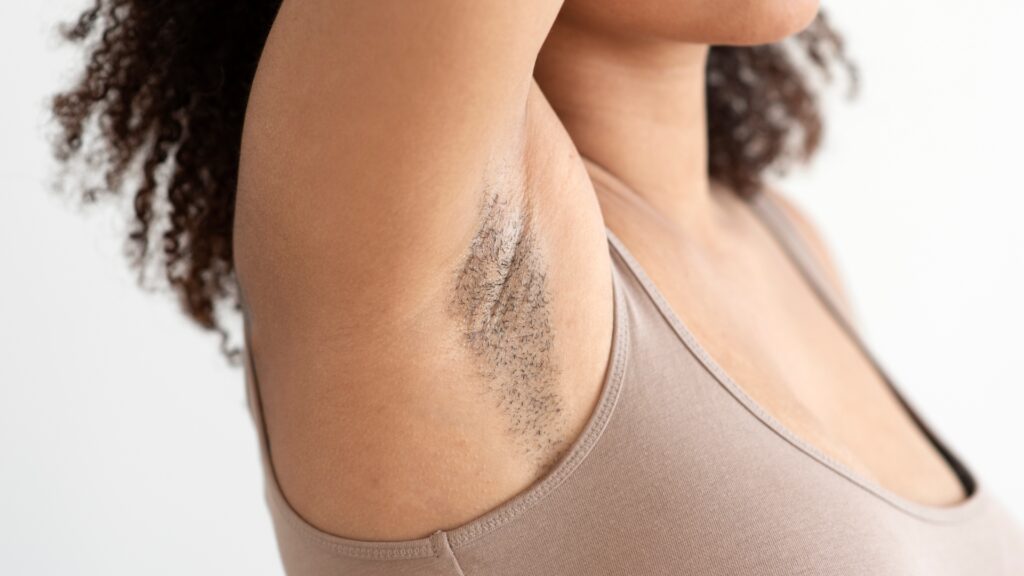
Some individuals exhibit a notable abundance of body hair, while others have skin that is nearly devoid of it. Contrary to popular belief, this variation is not solely determined by testosterone levels. A complex interplay of hormones, genetics, and familial heritage shapes each person’s unique hair growth.
The Role of Hormones in Hair Growth
The development of hair is primarily influenced by androgens, a category of hormones that includes testosterone. However, the key player in this process is actually DHT (dihydrotestosterone), a more potent derivative of testosterone, which is produced by the body via a specific enzyme.
This influence becomes particularly apparent during puberty. Under its action, the fine peach fuzz that covers the body can transform into thicker, darker, and stronger hair in certain areas such as the face, chest, arms, and back. Interestingly, most of us have a similar number of hair follicles; the difference lies not in their quantity, but in the type of hair they generate.
The Sensitivity of Follicles Makes the Difference
Why do two individuals with comparable testosterone levels exhibit different hairiness? The answer resides in the sensitivity of their hair follicles. This sensitivity can vary significantly from one person to another, a characteristic largely dictated by genetics. In some cases, follicles respond strongly to androgens, leading to denser hair growth. For others, the response is much subtler. In essence, it is not solely the amount of hormones that matters, but how one’s body interprets them.
How Genetics Informs Your Hair Characteristics
Your familial heritage significantly influences your hair growth. Researchers have identified a gene called EDAR, which plays a crucial role in the formation of hair follicles from early embryonic development. Certain variations of this gene affect the thickness and structure of hair and body hair. These variations are more prevalent in specific populations, explaining why individuals of Mediterranean, Middle Eastern, or South Asian descent often display more noticeable hair growth, while those from East Asia generally have less. Such differences are simply part of the rich tapestry of human diversity.
Increased Hair Growth in Women: Is It Normal?
Absolutely. For women, more pronounced hairiness is often attributed to genetic factors or family background. It is a natural variation that typically poses no health concerns. However, an abrupt increase in hair growth can sometimes indicate a hormonal imbalance, such as in the case of polycystic ovary syndrome (PCOS), which causes elevated androgen production. If this change is accompanied by other symptoms or occurs suddenly, it is advisable to consult a healthcare professional.
View this post on Instagram
A Natural Trait, Plain and Simple
Being more or less hairy does not indicate anything about your health, femininity, or masculinity. This characteristic arises from a delicate balance of genetics, hormones, and follicle sensitivity.
In truth, hair growth is a manifestation of biological diversity. Every body has its unique equilibrium, shaped by heredity and evolution. This variation is a perfectly natural reminder that there is no singular way to exist; rather, there exists a multitude of variations, all equally normal.
