
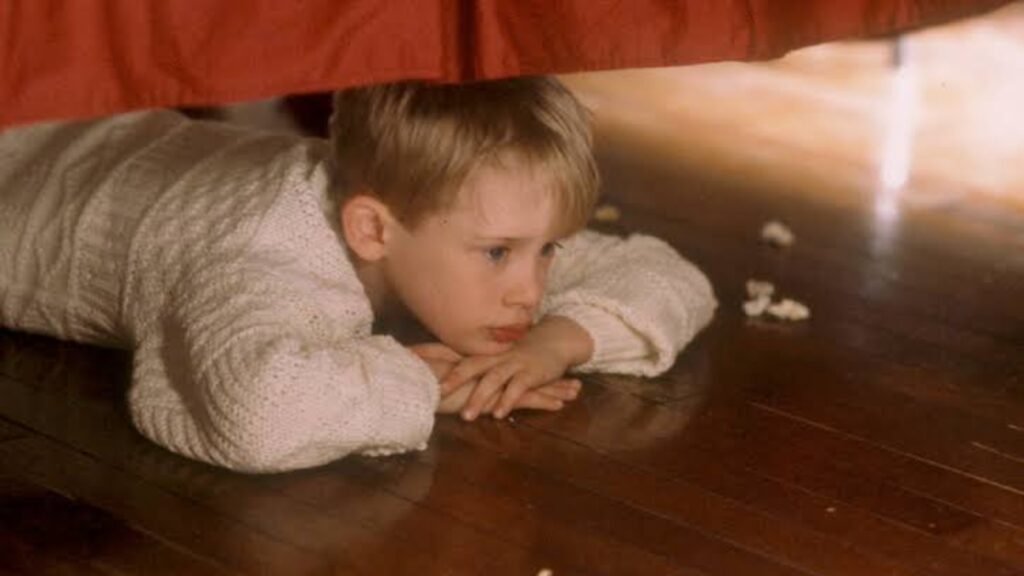
When our childhood home is no longer part of the family, and its keys leave our hands for good, it is truly heart-wrenching. This feeling isn’t merely a sign of materialism or unhealthy nostalgia. Instead, that childhood home holds an infinite array of memories within its walls. It is an archive in its own right. We must then mourn everything it represents: joyful moments, a fulfilled childhood, carefree adolescence, and unparalleled Sunday gatherings. This is a mourning process in its own right.
When a House Becomes a Family Member
Our childhood home is not just a residence to be filled in on administrative forms or school documents. It embodies much more than a simple dwelling. It is a repository of emotions, a compilation of memories—an album cataloging many life scenes, both distant yet still vivid in our minds. This house welcomed our first steps and echoed the sobs of our first heartbreak, carrying deep sentimental value. It is not merely a roof over our heads; it is where we grew, evolved, and transformed.
At times, due to professional reasons, a relocation to another region, or a separation, this home that is so integral to our identity and that houses innumerable memories ends up on the market. In that moment, our foundation crumbles. Where potential buyers see a kitchen in need of modernization, we recall flour fights, drunken confidences, and bedtime squabbles. What they notice as a sunny bay window or pristine flooring becomes the backdrop for our first pajama party or that cringeworthy selfie that made it to our Skyblog.
We relive all the scenes of our existence. Ultimately, this house resembles an immense box filled with archives of clips, smiles, and sighs. For the real estate agent, it’s a property with “potential,” but for us, it’s the cradle of our life, the nucleus of our family. To the agent, this house is living space, energy performance, and a roof to inspect. From our perspective, it is a personal museum, each nook holding fragments of our lives. This house is a legacy, and not in a financial sense. Psychologists refer to it as “place identity.”
Saying goodbye to your house means saying goodbye to a part of yourself
In 2006, researcher Igor Knez explored this unique connection between places and autobiographical memory. His work illustrates how certain locations become embedded in our personal memories and contribute to our self-perception. Our childhood home thus serves as more than just a backdrop. It bears witness to our transformations, our first experiences, and those seemingly small events that shaped who we are today.
Within those walls, we learned to walk, imagined countless scenarios to escape homework, felt the pangs of young love, and prepared for our leap into independence. Even as adults, sometimes all it takes is the scent of fresh laundry or the familiar creak of a stair to reconnect us to our former selves.
So, when the house goes up for sale, it’s not just an address we are about to erase from our daily lives. It signifies the loss of the privilege to return to the setting of our own history. The bedroom remains, the stairs are unchanged, and the garden continues to bloom, yet they no longer belong to us. It is as if the archives of our lives have suddenly become off-limits.
A unique sorrow that can be hard to articulate
However, this heartache often goes unheard. Friends and family may attempt to console us with cliché phrases: “They’re just walls,” “The memories remain,” “You need to move on,”—words that may be well-intentioned, yet often fall flat for those witnessing their childhood change hands.
As early as 1963, sociologist Marc Fried explored the pain associated with losing one’s home. He notably studied the reactions of residents forced to leave their neighborhoods due to urban renewal projects. While this situation is undeniably more dramatic than an ordinary home sale, it sheds light on the emotional and social bonds a house can represent.
Of course, this attachment isn’t universal. Some leave their childhood homes without a second thought, either because they have lived in multiple places or because these walls do not evoke happy memories. Yet others maintain an almost visceral connection to their former dwellings. Often, it is not the act of emptying closets that stings most, but the thought of strangers moving into spaces once filled with their laughter.
Leaving without saying goodbye to the memories
To soften the blow of separation, some photograph every room before handing over the keys, keep a doorknob as a memento, or salvage a few items of no market value yet rich in history. Others might opt to host one final family dinner, as if to offer the house one last scene before the curtain falls.
These small rituals may not erase the sorrow but can ease the transition into change. Mourning a house doesn’t necessarily mean wanting to remain imprisoned by the past; it can simply mean acknowledging the role it played in our personal development.
Ultimately, no matter how many new owners tear down wallpaper, renovate kitchens, or completely redesign gardens, they can never erase the stories that unfolded within. Memories don’t appear in the sales contract nor do they transfer with the keyring. While this house may no longer be part of our family heritage, it will always hold a special place in the landscape of our inner world.
