
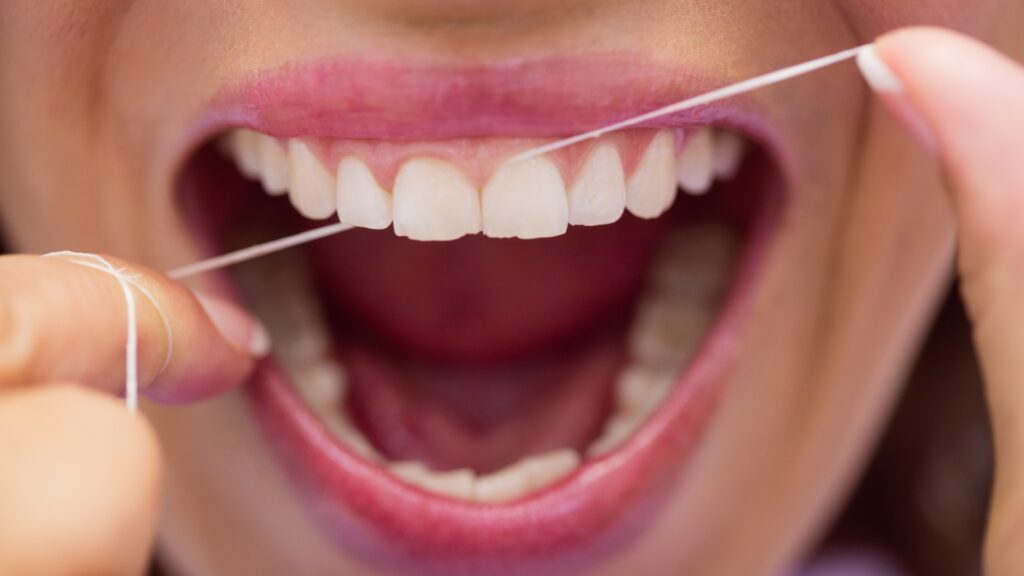
Brushing your teeth after every meal is the cornerstone of effective oral hygiene. Yet, beyond this nearly automatic habit, there’s a crucial step that enhances this cleaning routine: dental floss. This small but mighty tool, designed to dislodge pesky food particles and unwanted bacteria nestled between your teeth, is often overshadowed by beauty influencers promoting various wellness gadgets. However, its benefits far exceed those of the trendy items often spotlighted online.
An Accessory Too Often Underestimated
Many members of Generation Z look forward to their first paycheck to afford cosmetic procedures abroad, like veneers, or to lighten their smile with whitening treatments worthy of advertisement. Yet, few invest time in maintaining their dental health or adhering to the oral care routines instilled by their parents. While childhood often brought about a structured teeth-brushing routine, adulthood frequently sees this essential ritual pushed aside, as we rush through it. This is a bit ironic considering the time spent meticulously applying creams, serums, and oddly colored masks in front of the mirror.
However, dental problems wait for no one. Even with access to advanced sonic toothbrushes featuring cutting-edge technology, flossing remains an indispensable habit for complete oral care. Not the most glamorous item on your vanity, dental floss is frequently recommended by dentists. It is far from optional; its significance is immense. While many might utilize it to avoid the embarrassing visual of food stuck in their teeth, its primary role is to clean those hard-to-reach spots. According to Kami Hoss, a dentist featured in SELF, a toothbrush only reaches about 60% of your teeth’s surface. Thus, floss takes care of the remaining portion.
Floss effectively removes plaque, prevents cavities, reduces the risk of periodontal disease, and ultimately enhances breath freshness. In other words, it significantly contributes to dental health by complementing the traditional teeth-brushing routine, ensuring that your mouth is genuinely clean and free of impurities.
Positive Impacts Beyond Oral Health
Dental floss does more than just eliminate post-meal debris and polish your smile; it also supports overall health and may even extend your lifespan. Yes, this often-overlooked tool that never seems to trend in viral hashtags could play a role in prolonging our time on this planet. Contrary to popular belief, the mouth can be the gateway to various health issues that might initially seem unrelated.
“The gingival sulcus, that delicate groove where the gum meets the tooth, is lined with one of the most permeable tissues in the human body,” the specialist notes. “Richly vascularized, it allows bacteria and all substances we introduce to enter the bloodstream directly.” This means bacteria residing in that area can move elsewhere in the body due to their high absorption rate. One particular bacteria, Porphyromonas gingivalis, has been known to clog arteries during heart attacks and has even been found in the brain tissue of Alzheimer’s patients. “Chronic periodontal diseases trigger systemic inflammation that impacts nearly every major category of diseases,” Dr. Hoss warns.
How to Use Dental Floss Properly
Dental floss isn’t the most “desirable” tool on the market, but it plays an invaluable preventive role in certain diseases. It isn’t a magic wand that resolves all issues in an instant, but it serves as a public health essential. If you’re not yet familiar with flossing, here’s a step-by-step guide for a thorough and effective cleanup:
- Cut a sufficient length
Take about 40 to 50 cm (16 to 20 inches) of floss. It may seem long, but this length allows you to use a clean segment for each gap. - Wrap it around your fingers
Wrap most of the floss around your middle fingers, leaving 2 to 3 cm (about an inch) taut between your fingers for manipulation. - Gently insert between your teeth
Carefully glide the floss between your teeth without forcing it. Avoid snapping the floss into your gums, which is a common mistake. - Form a “C” around the tooth
Once between two teeth, press the floss against one tooth in a C shape and gently slide it from the gum line upward. - Clean both sides
Repeat this motion on the left tooth, then the right tooth within the same space. - Change areas with each tooth
Unroll a bit of clean floss for each new area to avoid redistributing bacteria.
The specialist recommends performing this ritual once a day, preferably in the evening before bedtime, for optimal and consistent use.
Simple to incorporate into a daily routine, it requires only a few minutes but offers lasting benefits. In summary, this discreet gesture makes a substantial difference in maintaining healthy teeth for longer.
