
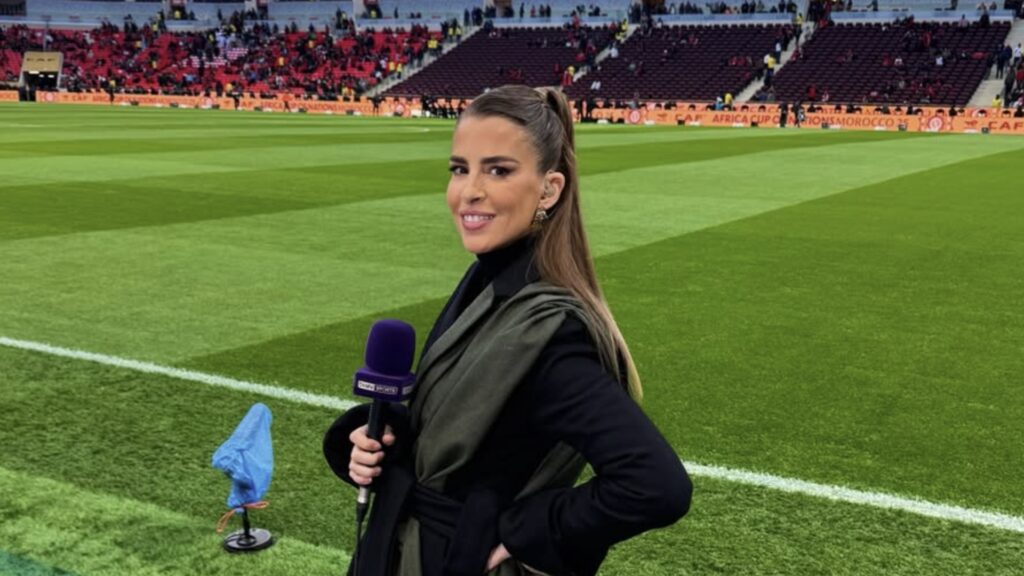
Journalist Vanessa Le Moigne recently announced her decision to step away from covering football, following a severe wave of cyberbullying. The incident stemmed from a question she posed to Senegalese goalkeeper Édouard Mendy after the highly charged final of the 2025 Africa Cup of Nations (CAN). Her emotional and symbolic departure reignites the discussion surrounding online hate and the treatment of female journalists in the sports arena.
A controversial question triggers an online storm
The situation escalated from a post-match exchange. After the final of the CAN, marked by incidents both in the stands and on the field, Vanessa Le Moigne asked Édouard Mendy about the penalty save against Morocco, inquiring, “At no point was there an arrangement between the two teams?” in reference to rumors of potential collusion.
This remark, made in an extremely tense context, quickly spiraled out of control and was widely shared across social media. Within hours, Vanessa Le Moigne became the target of an onslaught of insults, mockery, and even threats—a relentless wave of digital hatred that persisted despite her public explanations.
The burden of media cyberbullying
In a series of Instagram stories, Vanessa Le Moigne shared her exhaustion and her decision to leave football coverage after the season. “Thank you, football, for the connections… But next. You will no longer have my back,” she expressed, conveying her fatigue with a ruthless environment. She clarified that at the time of her interview, she was unaware of the condition of two stewards injured during the clashes, stating, “I wasn’t speaking about football, but about a dire climate.” She also highlighted the lack of support from her peers, underscoring how vulnerable journalists are in the face of online hatred.
View this post on Instagram
Support surfaces for her defense
While journalist Vanessa Le Moigne faced a barrage of online aggression, several colleagues voiced their support. Margot Dumont from Canal+ reminded followers on X (formerly Twitter) that one can “disagree on a question,” but no disagreement justifies such violence.
Le Moigne’s experience adds to a troubling trend where female professionals in sports—be they commentators, presenters, or reporters—are frequently subjected to sexism and online attacks. Studies indicate that female journalists are three times more likely to experience cyberbullying than their male counterparts. As we move further into 2026, women are no longer silent; they refuse to apologize for their presence: they have as much right as anyone to occupy public space.
A decision that questions the realms of sports and media
By announcing her exit from football coverage, Vanessa Le Moigne shines a spotlight on a profound issue within sports journalism: the increasing confusion between legitimate critique and outright hatred, as well as the distinction between debate and personal attack. Although sports federations and media organizations are stepping up their efforts against cyberbullying, this case underscores the urgent need for stronger protective measures for professionals facing online violence.
Ultimately, the Vanessa Le Moigne affair transcends a mere post-match controversy; it reveals the fragility of public discourse in the social media age and the brutal online reactions directed at female journalists. Her departure from football serves as a wake-up call: without respect and digital moderation, the freedom to inform is constantly under threat.
