
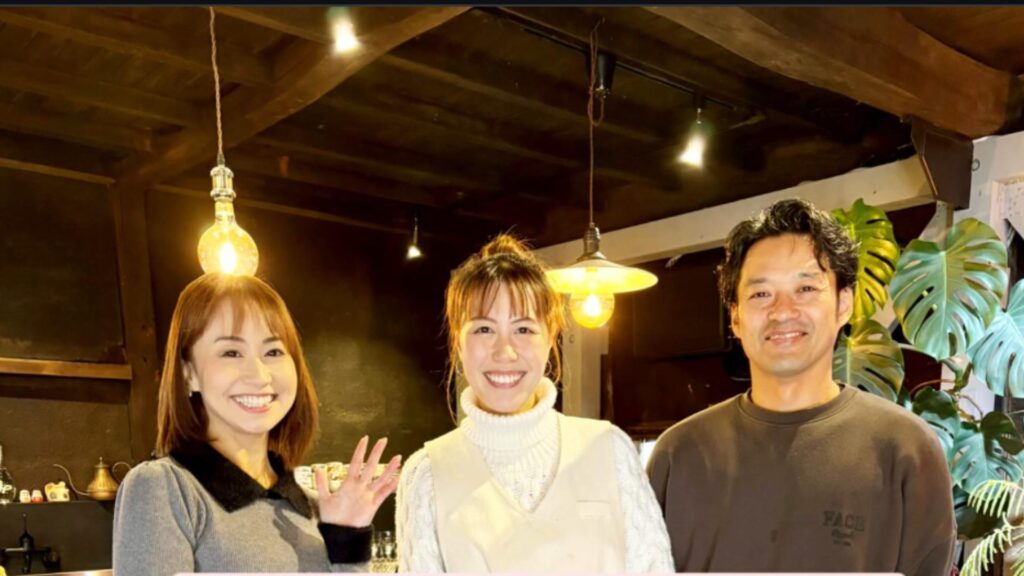
Some career transformations are straightforward to understand, while others, like that of Rei Onoda, require a deeper look. Once an airline stewardess for Emirates, this thirty-something Japanese woman traded the bustling experience of international flights and the skyline of Dubai for a 180-year-old house in a quaint mountain village in Japan, where she bakes bread every morning.
Four Years in the Skies of Dubai
Rei Onoda spent approximately four years as a flight attendant for Emirates, stationed in Dubai. It was a life filled with travel, hotels, and ever-changing time zones—an exhilarating yet fast-paced lifestyle far removed from any sense of calm or slowness. Upon returning to Japan after her marriage, she settled in Tokyo and joined a public relations agency specializing in tourism. It was here that a new vision began to take shape.
The Rural Japan Revelation
In her PR role, Rei had the opportunity to guide foreign journalists throughout Japan—not just in the bustling metropolis but also in lesser-known rural areas. “I realized how many beautiful places existed in my own country that I had never seen before. I started envisioning a more rural life,” she reflects, she recalls. The COVID-19 pandemic ultimately accelerated her plans.
COVID as a Catalyst
While confined to a high-rent apartment near Shibuya Station, Rei and her husband faced the challenges of a tight urban living space. After two years of searching, they made a radical decision to purchase a 180-year-old house in Kamijo village, located about 225 kilometers northwest of Tokyo, for 8.5 million yen (approximately €50,000). The property comes with 2.4 hectares of agricultural land. Rei’s husband left his fashion job to become a certified farmer, a requirement for utilizing this regulated land.
A Bakery Born from Constraint
The couple’s plan to renovate the old house into a residential space faced stringent preservation regulations that proved costly and complicated. They pivoted instead to launching a café-bakery, funding the entire venture—renovation, equipment, and construction—for about 50 million yen, 29 million of which came from public subsidies aimed at regional development and cultural preservation.
Three Years of Renovation, Bakery Training, and a Baby
As the renovations unfolded over three years, Rei undertook bakery training in Tokyo with a craftsman trained in Germany. During this time, she also became pregnant with her son. The bakery, Kamijyoan, opened its doors a year and a half ago. Rei manages the bakery’s offerings, which include country bread, sandwich bread, rye bread, cakes, and cookies, while her husband oversees the café. The establishment attracts both locals and tourists and features their own artisanal peach beer.
See this post on Instagram
The Community as a Foundation
“Balancing bakery life with motherhood has been challenging, but I’ve learned to rely on others,” Rei shares. The support from her in-laws and the local daycare has been invaluable. With each loaf she bakes, she sends a message to her son: “This bakery thrives because of the support of our local community. I hope that as my son grows, he understands the importance of building something together with others and not giving up on what one believes in.”
From Emirates’ A380s to a wood-fired oven in a 180-year-old house, Rei Onoda has chosen a path that is anything but conventional. Her journey illustrates that a “radical” life change, when rooted in a clear vision and a strong community, can lead to the creation of something truly lasting.
