
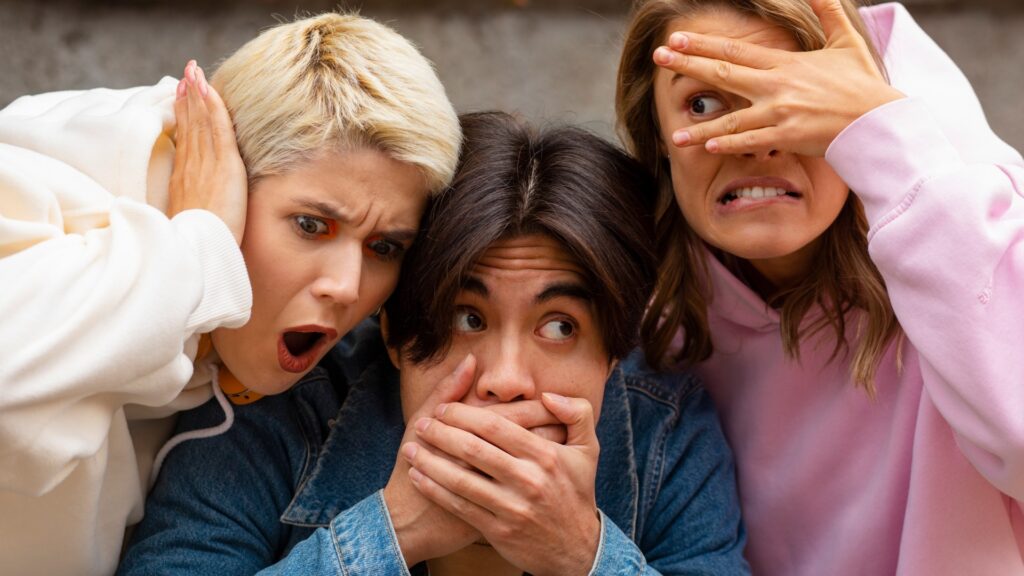
You may have found yourself mixing up the names of loved ones during a family gathering, leaving you momentarily puzzled. In the heat of the moment, you likely questioned, “How could I make such an obvious mistake?” Rest assured, this type of confusion is more common than you think and does not diminish your affection for those around you.
A mistake more common than we realize
You might have felt frustrated when your mother called you by your older sister’s name, only to find yourself doing the same thing later on. How many times have you accidentally mixed up your children’s names, addressing your younger son when you intended to call your eldest? This experience mirrors the awkwardness of addressing your teacher as “Mom” in class.
This emotional slip, although it might disrupt the atmosphere at home and hint at favoritism, is quite normal. No, you are not heartless, nor are you showing early signs of dementia. Such mistakes are most likely to occur in emotionally charged situations when your brain is operating on autopilot.
Contrary to popular belief, these mix-ups are not indicative of a memory issue. They can happen to anyone, regardless of age, and may even occur when one is fully focused. Interestingly, our brains do not categorize names in isolation; instead, they group them by emotional connections.
The brain categorizes by emotional bonds, not logic
Neuroscientists explain that our brains organize information according to semantic networks. In simpler terms, individuals who share a similar role in our lives—be it children, partners, or close friends—are mentally grouped into the same “emotional family.”
When you attempt to recall a name, your brain activates this emotional category before pinpointing the exact word. Consequently, a similar name may come to mind instead. Thus, it’s not a flaw but a direct result of attachment.
Ironically, we rarely confuse the names of those with whom we have no strong emotional ties—except in situations where we might be distracted or when the names sound alike. It’s possible to mix up two colleagues named Emily and Elodie, but that remains the exception rather than the rule. Therefore, such name mix-ups may point to an excess of intimacy rather than a lapse in attention.
A sign of attachment, not negligence
This aspect often surprises many: mistaking someone’s name can actually reflect feelings of affection. Research indicates that these confusions predominantly occur among loved ones, rarely manifesting with acquaintances or casual contacts.
The phenomenon is particularly pronounced within families. Parents frequently intermix their children’s names, especially when calling them for emotionally driven reasons, such as comfort, concern, or joy. In these moments, a name transcends its role as a precise identifier and becomes a symbol of a deeper relationship. While socially, misnaming someone is often viewed as a faux pas—suggesting a lack of consideration or even an implicit comparison—it simply represents a moment when the brain gets tangled up.
The next time you mistakenly call someone by a different name, don’t be too hard on yourself. This slip might simply indicate that this person matters to you. So take it in stride; it’s a sign of love, not emotional indifference.
