
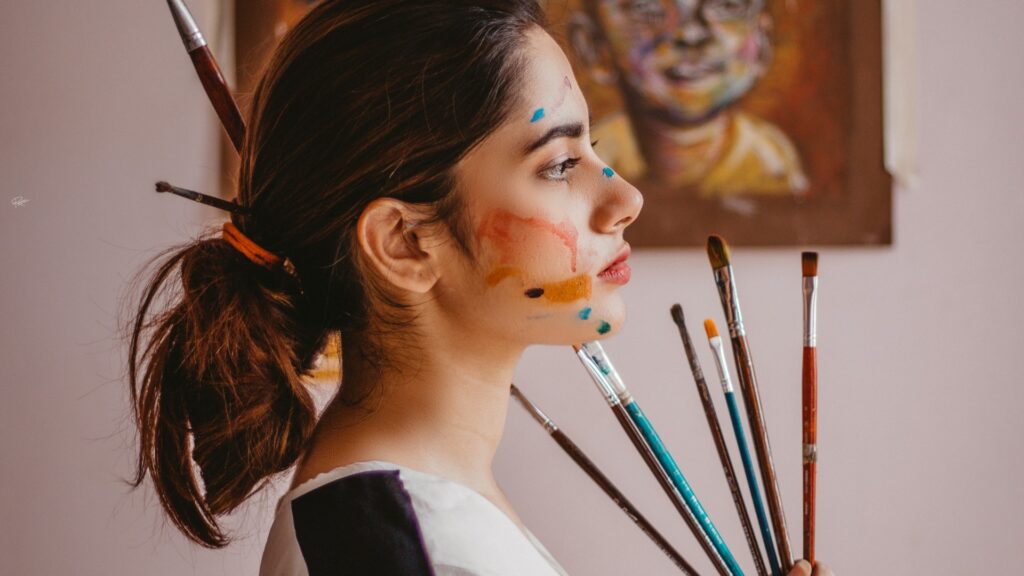
You find yourself cycling through various extracurricular activities, from pottery classes to stadium corridors, yet never feeling completely at ease. As children, our passions are joyous, carefree moments, but as adults, these hobbies morph into a relentless pursuit of perfection—a dangerous game of performance. Instead of striving for excellence in every pastime, psychologists advocate for a more balanced approach.
The Average Lifespan of Hobbies Among Adults
In childhood, hobbies emerge almost spontaneously: around a sheet of blank paper, a chaotic microphone, or a curb transformed into a tightrope walk. We don’t compare ourselves to our neighbors or wonder if our moves are Instagrammable. We immerse ourselves in the present, solely focused on our own joy. However, upon reaching adulthood, once stripped of our blissful innocence, things change. We are tempted by trendy activities showcased in magazine spreads or viral hashtags.
We dabble in paddle tennis to impress our colleagues or indulge in Pilates, driven by pastel-clad women infiltrating our social feeds. Currently, it seems everyone is lacing up their sneakers for a jog. Overnight, casual Sunday runners, gasping after a block, envision themselves crossing marathon finish lines. This observation applies to other leisure activities that are supposed to be mere distractions, outlets for relaxation post-work, rather than a quest for excellence or competition.
In a society that relentlessly pushes for success—even in wellness activities—we continue to aim higher. We can hardly undertake a hobby without envisioning personal records. We barely begin regular urban walking before contemplating climbing Everest. This desire to “surpass” or progress faster than others often backfires, leaving us exhausted. Consequently, we quickly abandon pursuits, convincing ourselves that “it’s just not for me.” According to a study by the British Heart Foundation, the average lifespan of adult hobbies is a mere 16 months.
Social Pressure to Always “Push Past” Limits
By definition, a passion is a “strong interest in something.” However, our current society, which values productivity over enjoyment, has skewed the very essence of hobbies. We play musical instruments hoping to become famous on YouTube or to join a successful band, rather than for mere enjoyment. We sing not to express our emotions but to advance through auditions of talent shows. It’s as if every move were being judged by a panel. Moreover, our inner critic is often harsher and more unforgiving than our yoga instructor or knitting workshop leader.
We engage in hobbies to impress followers, shine in public, and elicit admiration, as if our lives were a glossy advertisement. “Adding financial pressures to a passion or setting overly ambitious goals can undermine our fulfillment, stripping away the simple joy of the activity,” explains therapist Rose Fisher in an interview with Refinery 29.
Ultimately, hobbies serve a greater purpose: they are moments of escape. We should aim to learn, not to outperform our mentors; we should simply experiment. It doesn’t matter if our drawing looks like it was made by a preschooler or if our yoga pose is all wrong. The goal is to clear our minds. “Engaging in hobbies just for the pleasure they bring is essential for our mental health and overall well-being,” the expert adds.
A New Approach: Embracing Leisure Lightly
We shouldn’t enroll in climbing classes solely to collect praise during family dinners. Nor should we try contemporary dance just to proclaim, “Look what I can do.” What if the secret lies not in finding a defining passion, but rather in discovering an activity that brings us joy in the moment? There’s no need to be a piano prodigy, a crochet queen, or a future marathon champion to justify your hobby. A pastime shouldn’t turn into a secondary performance or a disguised LinkedIn entry.
According to Rose Fisher, engaging in activities without the burden of results can lead to a state of flow. This mental state occurs when we are so absorbed in what we are doing that the outside world fades away. We forget to count the minutes, check our notifications, or question our adequacy. We are simply present, mentally weightless and focused.
This is precisely what many adults have lost along the way. By turning every leisure activity into a personal optimization project, we forget perhaps the most precious sensation: doing something for the sake of doing it—without expectations, without external validation, and without a checklist of goals. You may love painting despite not knowing how to create correct perspectives, or perhaps you enjoy singing off-key in your kitchen or gardening while struggling to keep basil alive for more than two weeks. And so what? Enjoyment doesn’t require a certificate of competence.
In the end, a hobby should be driven by personal desire, not societal pressures. Sometimes, it’s better to engage half-heartedly than to expend all your energy trying to meet unrealistic standards.
