
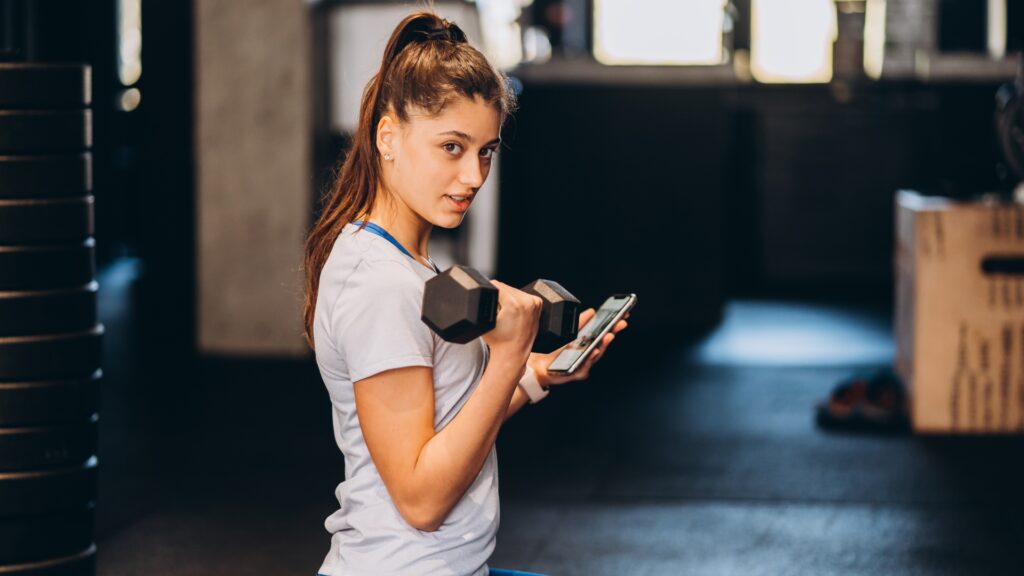
In 2026, weight training has emerged as a dominant trend among young adults. The era of cardio supremacy is giving way to strength training, targeted conditioning, and functional performance. However, a crucial truth remains: your body is already valid as it is, whether you engage in sports or not.
A New Culture of Strong Bodies
For Gen Z and millennials, body standards are evolving. The obsession with thinness is gradually yielding to a more functional perspective on the body—one that is capable, strong, and self-sufficient. Weight training is becoming a symbol of personal power, sustainable health, and self-mastery. Collective workout classes have seen a remarkable rise, skyrocketing from the bottom to the top of popularity charts in many countries, from France to the United States and South Korea.
Young women play a pivotal role in this transformation. On social media, numerous content creators celebrate strength, independence, and self-confidence, stepping away from the outdated narratives focused solely on thinness. The message is clear: feeling strong is not about altering one’s body; it’s about fully inhabiting it.
Blending Aesthetics, Health, and Mental Well-Being
There are several reasons weight training appeals to enthusiasts. Physically, it allows for body recomposition, enhances bone density, boosts metabolism, and helps prevent age-related muscle loss. Mentally, it fosters a sense of progress and control, which bolsters self-esteem and confidence in one’s abilities.
Health organizations even recommend engaging in strength training at least twice a week. Yet, despite the pervasive presence of weight training on social media, a significant portion of young adults fails to meet these recommendations. This discrepancy highlights a gap between online portrayals and the realities faced by many—busy schedules, fatigue, financial constraints, or simply a lack of motivation.
In response to this growing enthusiasm, gyms are transforming. They are introducing more machines, functional training spaces, engaging formats, and programs tailored to diverse skill levels. Technology is a key player in this shift: tracking apps, wearable devices, and performance tools are becoming commonplace, aiding those who wish to structure their workouts.
This evolution makes weight training more inclusive, educational, and less intimidating than in the past. It is no longer reserved for bodybuilders or the elite few; it is now accessible to anyone looking to move, progress, and feel comfortable in their body.
A Trend, Not an Imperative
It’s important to emphasize: weight training is an option, not a requirement. Your body does not need to be maintained, fixed, modified, or “optimized” to be worthy. It deserves respect, care, and consideration just as it is today.
You don’t have to prove anything to a trend, to societal standards, or to anyone else. Engage in exercise or weight training solely if you desire it, if it brings you joy, or a sense of achievement. And if it does not, know that your worth, health, and beauty remain untouched.
In conclusion, while weight training has become a cultural reference point for many young adults, it is neither universal nor essential. True well-being is founded on self-awareness, respect for one’s needs, and the freedom to choose what truly resonates with you.
