
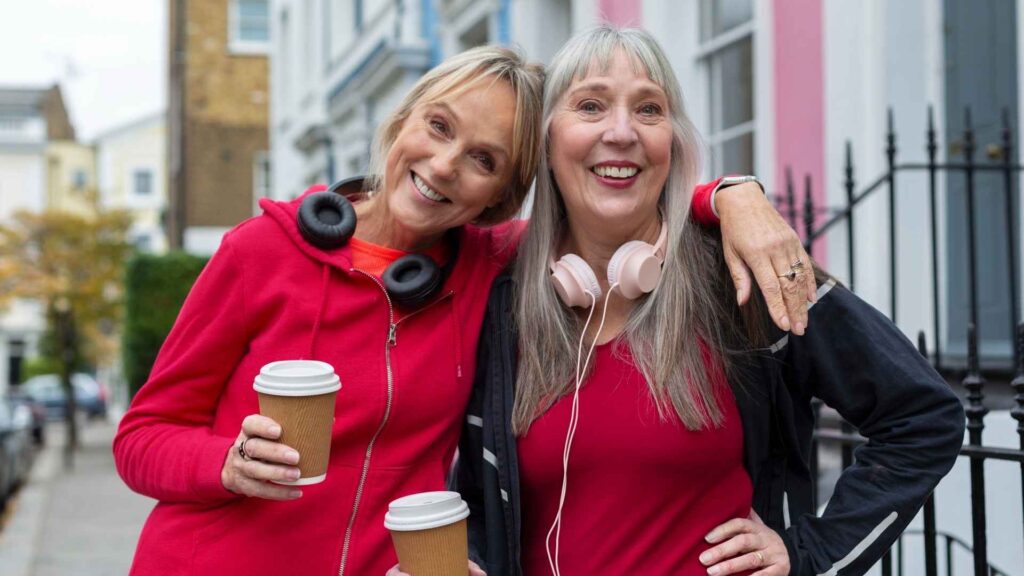
It’s common to think of a walking partner as someone who helps prevent last-minute cancellations. However, a stroll shared with another offers something more: a moment of synchronized movement where conversations flow effortlessly, and no one feels the need to check the time constantly.
The rendezvous requires minimal planning—just a comfortable pair of shoes, a route of varying length, and a companion you enjoy spending time with. No reservations, no complicated gear, and no performance benchmarks needed to validate the experience.
This simplicity is precisely what makes walking together appealing. The act of moving becomes the backdrop for a shared moment. You can converse, enjoy silence, observe your surroundings, or decide at a whim to extend your walk simply because the conversation is still unfolding.
And this relational aspect may hold more significance than we often realize.
Walking side by side alters how we spend time together
Conversations at the dinner table differ from those while walking. When you’re moving side by side, your gaze isn’t constantly locked onto the other person. The quiet moments can feel less awkward as there’s always something happening around you: a street to cross, a dog passing by, or a path to choose.
This scenario creates a much more relaxed atmosphere.
Researchers studying couples have long observed that partners influence each other’s activity habits. The support and encouragement tied to movement are linked, in some studies, to greater satisfaction in relationships.
This support is not about pushing someone to walk faster or chastising them for not logging enough miles. It can be as simple as asking, “Shall we go for a walk?”
The distinction is crucial. Encouragement is not control. If the walk becomes an excuse to tally your partner’s steps, comment on their pace, or monitor their physical condition, it quickly loses its appeal.
Your walking companion should be just that: good company, not an unwelcome coach. Some days, one person may want to go further; other days, the roles may reverse. You can slow down, stop, or change your route without interpreting every shift as a lack of willpower.
The true benefit may lie in the rendezvous rather than the distance
We often hear about motivation in discussions surrounding physical activity. The focus is on finding the right app, achieving daily goals, or maintaining streaks. Walking with someone dramatically alters this mindset.
You’re no longer stepping out solely because a tracker signals you’re 2,000 steps short. You might also step out because it’s a moment to connect with your partner, a friend, a sibling, or a family member.
The rendezvous then becomes more significant than the actual distance covered.
This could mean a quick twenty-minute stroll after dinner, a longer trek on a Sunday, or walking to the bakery instead of driving. There’s no hierarchy in formats.
Unlike a highly structured activity, walking allows ample opportunity for conversation. You can share details from your day, revisit concerns on your mind, or engage in light-hearted banter about trivial matters. This shared time is valuable in its own right.
A study involving couples found that offering support to a partner was linked to increased positive emotions and higher relationship satisfaction for the supporter on the same day. In other words, being present for another can enhance our own experiences.
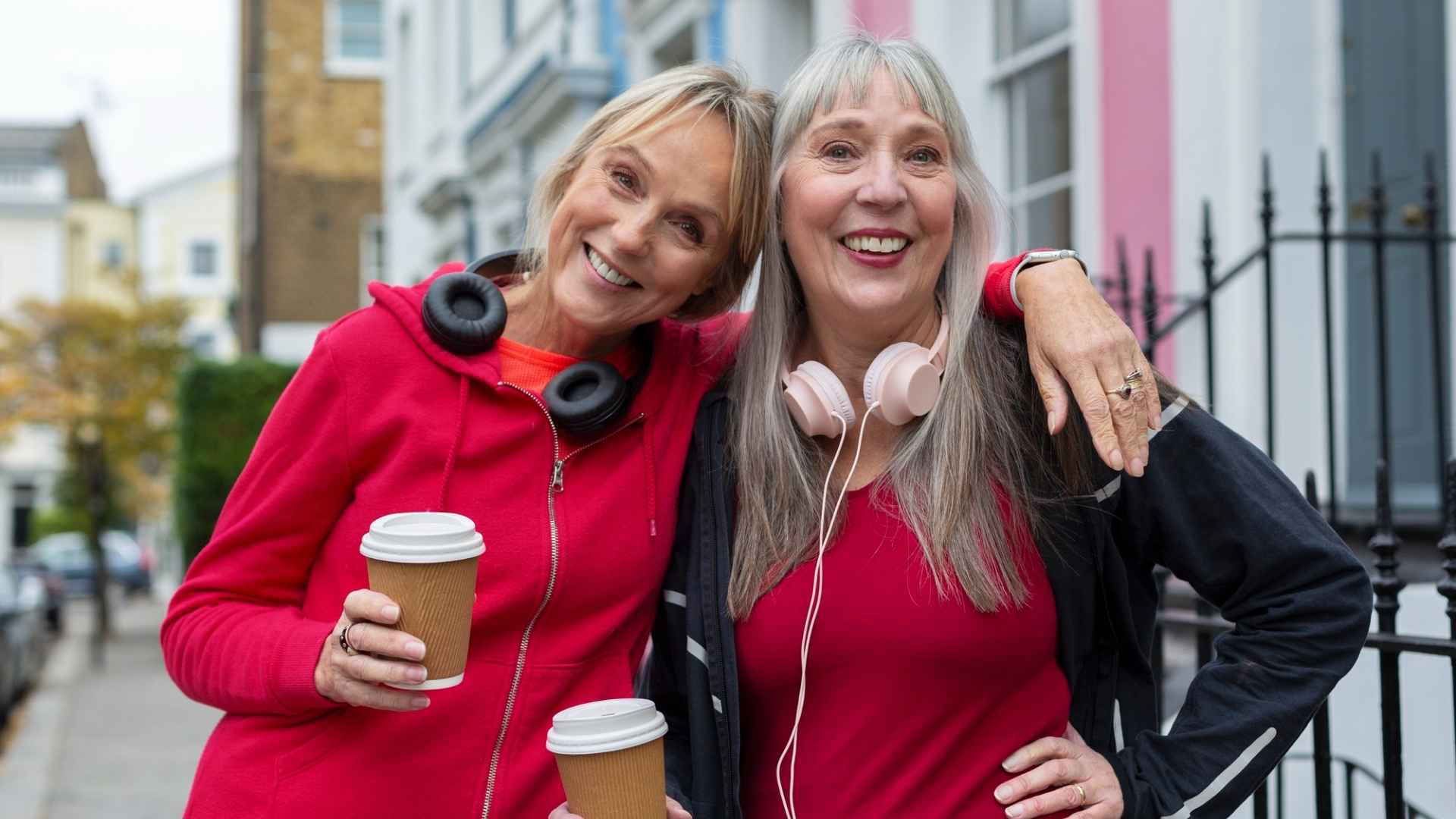
However, a walk creates one very tangible benefit: shared time together. And in days filled with screen-to-screen interactions, that’s no small feat.
Walking together does not mean walking the same way
This is likely the most crucial rule.
Two individuals can have completely different bodies, habits, and energy levels. One person may naturally walk briskly, while the other prefers a slower pace. One may enjoy uphill climbs, while the other may actively dislike them.
Walking together doesn’t require you to become identical. The pace can be adjusted to accommodate the person who needs to take it slower. A pause can happen without a need for justification. The length of the outing does not determine its success.
It is also unnecessary to transform walking into a strategy to alter your physique. You can walk for the joy of movement without striving to lose weight, counting calories, or comparing your pace to that of your companion.
Your body deserves to move simply because that walk feels good. And if the stroll ends with a drink or snack on a terrace, it has not been “wasted.” A pleasant moment doesn’t need to be justified to hold value.
Perhaps that is the most intriguing aspect of walking together.
What may start as a way to motivate each other to get outside can gradually evolve into something more profound: a rendezvous, a conversation, a cherished habit.
Some days, you’ll walk for a long time; other days, you may just circle the neighborhood. In either case, you’ll have moved forward together.
