
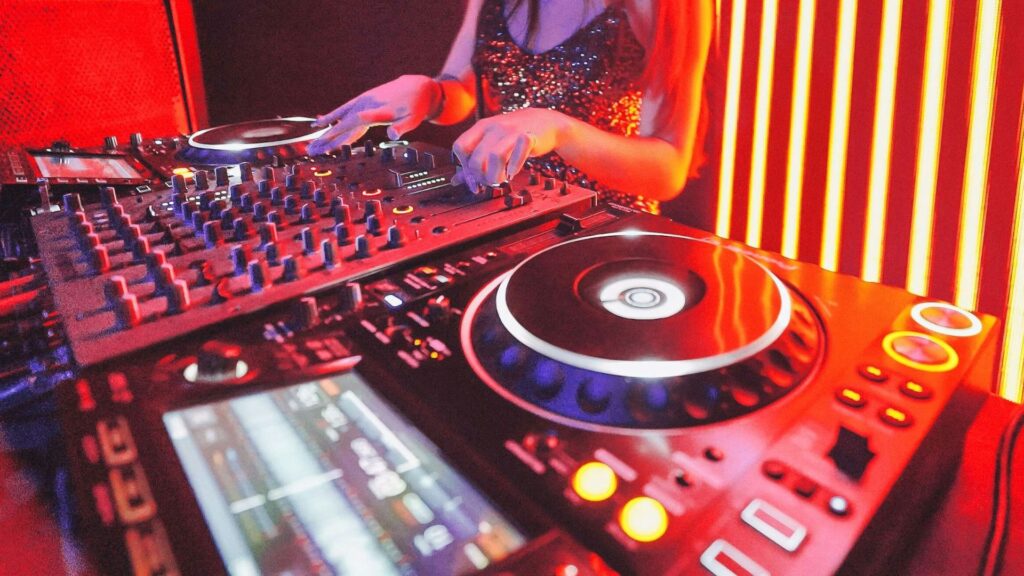
In the intimate confines of her kitchen, tucked between the refrigerator and the oven, a DJ spun her turntables—not in front of a raucous crowd, but before the lens of her camera. When she swapped her oversized hoodie for a dress that revealed a bit more skin, her viewership surged dramatically. This distressing shift underscores a harsh reality: women often garner more attention for their bodies than their talent.
Viewership Skyrockets with Outfit Changes
When content creator @two.face222 launched her live session on TikTok, she never anticipated her musical performance would evolve into a broader social commentary. This DJ, who labels herself an “experimental beatmaker,” is accustomed to improvising sets in the comfort of her home rather than beneath disco balls. Specializing in hybrid sounds and unconventional mixes, she follows a unique digital ritual—sharing her rhythmic creations through unadorned live videos.
Unlike some rock bands or alternative music ensembles that perform in the gritty ambiance of a garage, this DJ sets her stage among a fruit bowl, a row of spices, and a coffee machine. Her art is meant to be heard rather than seen. However, it seems some viewers arrive with motives beyond merely enjoying the music, as they click on her thumbnail to join this 2.0 party.
What this DJ discovered was a troubling reality: merely changing her attire had a significant impact. When mixing in an opaque grey sweatshirt, her viewer count barely grazed 60. Yet, when she donned a plunging neckline that exposed her skin, the audience surged to nearly 230, even though she remained immobile and simply mixed music. What began as an effort to showcase her talent morphed into stark evidence of ongoing sexualization. “What happened during my live today proves the fundamental issues women face in our society,” the video creator lamented in the post’s caption.
View this post on Instagram
The Algorithm’s Role in the Background
“Usually, I have 3 viewers when I’m in a sweatshirt, but it only takes a hint of breast and the algorithm goes wild,” the DJ observes, lamenting her unintentional role as a fantasy bait. She sees no coincidence in the data; crossing the symbolic threshold of 200 views didn’t stem from her musical prowess or unique artistic identity, but rather from the machinations of an algorithm that elevates women only when they wear less clothing. Social media often serves as a sexist showcase, reducing women to objects and turning any female content into something erotic or suggestive in nature.
This phenomenon is documented in a troubling study from University College London and the University of Kent, revealing that after just five days of use, TikTok’s algorithm favored misogynistic content four times more frequently, highlighting objectification, sexual harassment, or the discredit of women—rising from 13% to 56% of recommended videos. The DJ became an unwitting victim of these poorly programmed algorithms while simply trying to pursue her craft.
Women DJs Reduced to Their Physique
Women are increasingly asserting their presence on nightclub stages and festival lineups, now comprising approximately 25% of festival lineups and 10% of artists booked by top clubs. This nocturnal profession is gradually becoming more female-centric.
The slow inclusion of women in the electronic music scene may be attributed to its often hostile environment. In these spaces, women find themselves covering their drinks and their figures simultaneously, feeling like prey in a lion’s den, making it challenging to dance freely.
Women DJs, who shine in the spotlight and energize the crowd, constantly have to prove their worth and endure inappropriate gestures behind the scenes. From bouncers dismissing their titles to male patrons dictating the musical direction, and others assuming a DJ in a miniskirt is “up for grabs” in sweltering conditions, female figures in nightlife are either treated like “gogo dancers” or perceived as amateurs.
Moreover, they are subjected to behaviors punishable by law. In 2023, they began speaking out under the hashtag that resonates all too well, #MeTooDJ. French DJ Paloma Colombe utilized Instagram as her megaphone, sharing her harrowing experiences of abuse at a concert in Paris from attendees and technicians alike.
Ultimately, what “Two Face” experiences in her video is just a fleeting glimpse into the challenges faced by women in her position during every performance. It also reflects a hypocritical society that condemns those who wear revealing outfits while eagerly consuming the very content they decry.
