
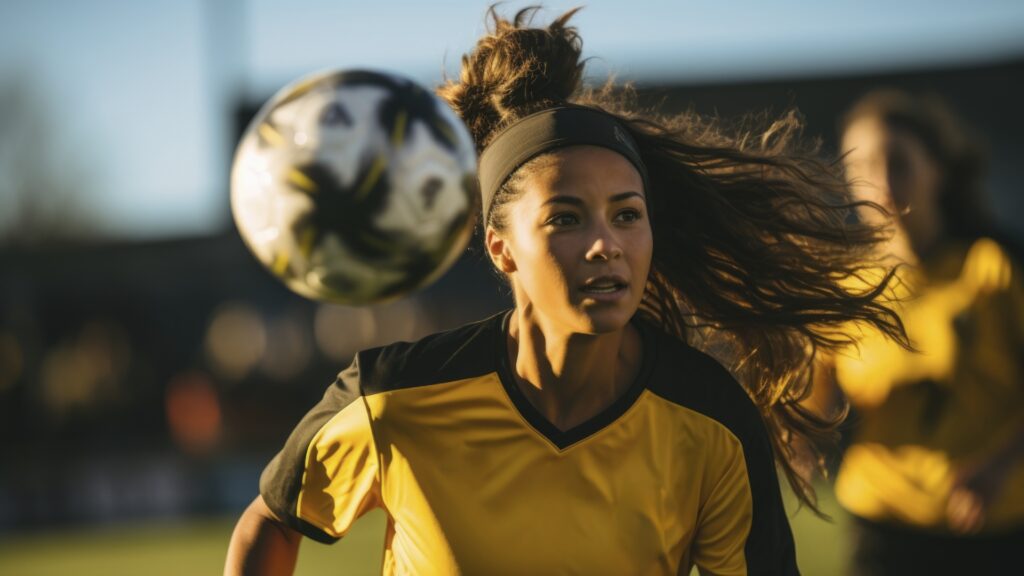
Sports are evolving toward greater female participation, yet the battle is far from won. In 2026, certain disciplines remain predominantly “masculine,” as if stadiums, velodromes, and locker rooms were designed chiefly with men in mind. While women are gradually asserting their presence, they still navigate deeply entrenched codes, habits, and perceptions.
Only One License in Three Belongs to Women
Statistics highlight the significant imbalance in sports participation. According to a report published by Insee and Injep in April 2024, based on licenses issued in 2022 by summer Olympic federations, women and girls account for only about one-third of all athletes licensed.
Encouragingly, there has been progress: between 2017 and 2022, the number of female licenses increased by 5%, while the number for men decreased by 2%. However, this is a nuanced improvement. The rising proportion of women partly reflects the decline in “masculine” participation, and the path toward genuine gender balance remains long. Moreover, these figures mask considerable disparities across different sports.
Football, Rugby, Cycling: Fields Still Dominated by Men
Football, rugby, cycling, and shooting are just a few of the disciplines where female representation remains alarmingly low. These sports have long been framed around a “masculine” model, influencing both practice and perception.
This phenomenon is not due to differences in physical capability or inherent inclination. For decades, these disciplines were conceived, organized, and marketed primarily for men. Men’s competitions received far greater visibility, equipment was often designed with them in mind, and male figures dominated media coverage. Under these circumstances, it is challenging to convince young girls that a rugby field or a competitive bike belongs as much to them as it does to their male counterparts.
Even in Female-Dominated Sports, Disparities Remain
The issue is reciprocal. In certain federations, women constitute over 80% of licensed athletes, particularly in fields such as dance, horseback riding, and gymnastics. This might seem like a positive development, yet this concentration reveals a different story: girls are often funneled early into a limited range of disciplines deemed more “feminine.” The problem isn’t that women lack an interest in sports; it’s that they often don’t enjoy the same freedom to choose which sports they pursue.
The Weight of Stereotypes Begins Early
This distribution does not occur randomly; it is established in childhood, sometimes even before young girls are fully aware of the barriers they face. By age 14, the trajectory toward a specific sport is typically set. The role models presented by family, schools, clubs, media, and social networks contribute to defining what is considered “normal” for girls versus boys.
A boy who wants to play rugby is rarely questioned on his decision. Conversely, a girl wishing to join a rugby team may still face comments about her appearance, strength, or supposed fragility. This is how stereotypes persist: through a steady stream of subtle messages, reflexive assumptions, and representations that eventually seem natural.
Women Are Gaining Ground, But They Start from a Disadvantage
Fortunately, progress is being made. Women’s football and rugby are experiencing notable growth, largely fueled by increased media visibility during major competitions. Combat sports are also attracting new female participants. These developments are crucial, as seeing strong, fast, and competitive women in public spaces contributes to broader representations of the female body.
A woman’s body does not have to be small, slender, graceful, or understated to be legitimate. It can be muscular, tall, robust, powerful, flexible, or simply just as it is. Every body deserves the opportunity to move, excel, and be represented. Nevertheless, these disciplines sometimes start from such low levels of participation that their growth is insufficient to rebalance the overall landscape.
The Issue Is Not Women’s Motivation
It is still too common to hear that women are “less interested” in certain sports. This explanation is appealing for its simplicity, yet it overlooks the larger context surrounding sports participation. For anyone to partake in a sport, they must be able to envision themselves engaged in it, find an accessible club, have suitable schedules, adequate facilities, and an environment where they feel legitimate.
Facilities designed for women, equitable scheduling, more female coaches, visible female role models, and regular media coverage are among the elements that can truly shift the landscape. It should not be up to women to prove they belong; rather, the sports environment must enable everyone to find their place.
Making Room for Everyone, Really
Sports do not escape the dynamics that still pervade our society. Many spaces have historically been constructed by and for men, while women have had to gradually claim their right to be visible, legitimate, and heard.
This is a particularly telling reflection in sports: some practices remain associated with the “masculine,” certain bodies receive greater valorization than others, and women still sometimes face more significant barriers to access the same spaces. The good news is that no organization is immutable. Mindsets are evolving, role models are diversifying, and younger generations can help dismantle these categories.
A girl should be able to choose football, rugby, boxing, cycling, or any other discipline without questioning whether she is “made” for it. And every sports field should be a space where every body can exist, grow, and claim its place without having to ask for permission.
