
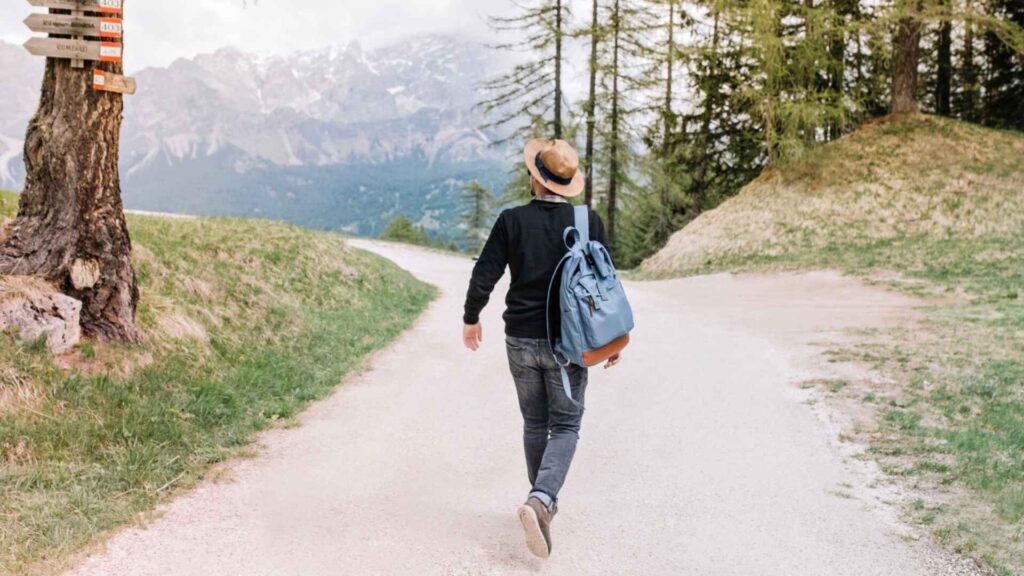
While the name may suggest a complex technique, lymphatic walking closely resembles a casual stroll: twenty to thirty minutes at a relaxed pace with shoulders down, arms free, and natural breathing.
This trend has gained traction on social media, where lymphatic drainage piques considerable interest. However, there’s no need to turn your walk into a rigorous exercise program. The essence lies in the movement of the body, particularly the legs as we walk.
No Need to Rush
Physical therapist Sabrina suggests walking for about twenty to thirty minutes. Keep your back naturally upright, your shoulders relaxed, and allow your arms to accompany your steps without forcing any exaggerated motions.
In other words, there’s no need to monitor a timer or hit a set speed. What we refer to as “lymphatic walking” isn’t a more intense form of walking; it’s primarily an invitation to move at a gentle pace.
Your breathing also plays a role in this overall movement. Simply allowing it to become fuller and more regular suffices, without turning every inhalation into a technical exercise.
If thirty minutes feels like too much on certain days, remember that ten or fifteen minutes still count as movement. A stroll isn’t a failure just because it ends sooner than planned.
Lightness Is Not Measured on a Scale
The term “drainage” often leads to discussions about losing inches or the need to “deflate” the body. This is not the approach to take here.
The primary sensation we aim for is that of a body engaged in activity after being sedentary for an extended period. Some may find solace in walking at the end of the day, others may prefer the morning or take a break during the day. There is no perfect time.
There’s no need to count calories burned, either. Walking can simply feel good because you’re stepping outside, your legs are moving, and you’re taking a few moments away from your chair or screen.
A Trend That Reveals a Simple Habit
Beneath its modern moniker, lymphatic walking sheds light on a familiar concept: a gentle, steady stroll can be enjoyable without the pressure of performance.
There’s no need for special attire, gadgets, or rigorous programs. Comfortable shoes and a pace that feels right for you are all that’s required.
Your body doesn’t need adjustment before you start, and you have nothing to prove once you’re back home.
If, after twenty or thirty minutes, you feel a bit lighter and pleased with the fresh air, then the walk has already served its purpose.
