
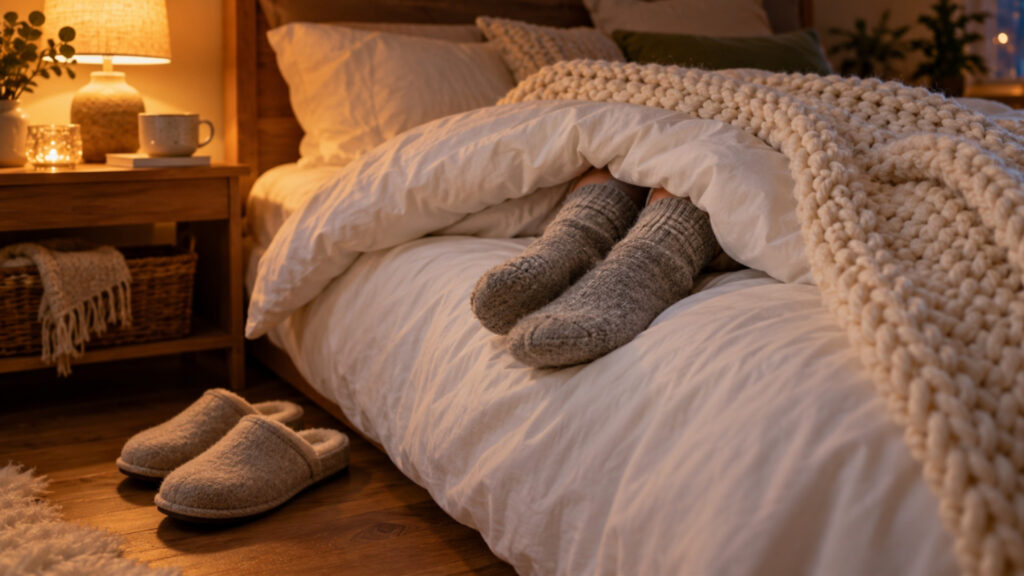
Sleeping with socks on can be a great idea if you often find your feet cold: warm feet help the body initiate the process of falling asleep. It’s important, however, to choose a clean, soft, and breathable pair, and to remove them if you become too warm during the night. Are you sliding under the covers with icy feet and struggling for what feels like an eternity to drift off? Science has examined the subject, revealing some oversights. Here’s everything you need to know about the advantages, limitations of studies, precautions, and alternatives before making your decision.
| Good idea if… | Better to avoid if… |
|---|---|
| You often have cold feet in the evening | You naturally get warm at night |
| Your room is cool | Your socks are tight or leave marks |
| You take time to fall asleep when your feet are cold | You keep the socks on that you wore all day |
| You wear soft socks made of wool, cashmere, or cotton | You tend to sweat excessively from your feet |
| You change pairs every night | You have a circulatory issue or diabetes without medical advice |
Sleeping with socks on: good idea or not?
That depends on your feet and your bedroom climate.
Yes, if you often have cold feet
If your feet tend to be cold when it’s time to go to sleep, a pair of socks can help you drift off more easily. The body needs to slightly lower its internal temperature to fall asleep, and warm feet assist it in releasing that heat. For those who are perpetually chilly, this simple action can facilitate a smoother transition to sleep.
No, if they’re tight, itchy, or damp
Socks that are too snug, leave marks on the skin, or restrict circulation can cause more harm than good. The same applies to socks made of synthetic materials that trap moisture or those you’ve worn all day. If you wake up feeling overheated, simply remove them: comfort is the best indicator.
Why keeping feet warm helps with falling asleep
Socks serve more than just the purpose of keeping your feet warm; the mechanism is quite intricate.
Vasodilation of the feet as a signal for sleep
As bedtime approaches, the body’s internal temperature naturally drops. To facilitate this, the body dilates small blood vessels in the skin of the hands and feet, which act as radiators, allowing heat to escape from the extremities. This process is known as vasodilation. Warm feet support this, while cold feet keep their vessels contracted, hindering the decrease in internal temperature and delaying sleep onset.
Keep your feet warm in the evening
The groundwork begins in the evening: feet that remain cold on tile or wood floors take longer to warm up under the duvet. Thick socks, a blanket draped over your lap, or a pair of wool-lined slippers upon entering your home can prepare your feet to be pleasantly warm when you slip into bed. You can then remove the slippers right beside the bed and perhaps don a pair of nighttime socks.
Research on socks and sleep and their limitations
The statistics you might have encountered do have a basis, but they stem from studies with very specific conditions.
A Swiss study on foot warmth and sleep onset
In 1999, a research team from Basel led by Kurt Kräuchi published an illuminating study in the journal Nature titled “Warm feet promote the rapid onset of sleep.” The researchers noted that the dilation of blood vessels in the skin of the hands and feet is one of the best indicators for rapid sleep onset. This study did not specifically focus on socks but established a link between warm extremities and sleep.
The South Korean study on six young men
This is frequently referenced. Published in 2018 in the Journal of Physiological Anthropology, it compared sleep among six young male participants in a room at 23 °C with and without heated socks over seven hours of sleep. With socks on, participants fell asleep on average 7.5 minutes faster, slept for an additional 32 minutes, and woke up less often.
While these findings are promising, they are limited. The sample size of six participants, all young males, is very small. Moreover, the socks tested were heated, not ordinary cotton or wool ones. Thus, it would be misleading to claim that sleeping in any pair of socks guarantees an extra half hour of sleep. Broader research is needed to validate these effects in everyday life.
Potential benefits of wearing socks in bed
With these precautions in mind, sleeping with socks can offer some tangible advantages.
Falling asleep faster when feet are cold
This is the most commonly reported benefit. By keeping your feet warm, socks assist the body in engaging the temperature decrease that accompanies sleep.
Fewer awakenings due to cold
A chilly room, slippery bedding, and uncovered feet can contribute to interruptions in sleep. Socks mitigate these temperature fluctuations at the foot level and can promote a more uninterrupted sleep, particularly in winter or in homes with inadequate heating.
Softer heels after a cream application
This is a well-known beauty practice. Applying a moisturizing cream or balm to your heels before donning a cotton pair of socks for the night helps the treatment absorb and prevents it from smearing all over the sheets. This habit can aid in softening dry heels.
Disadvantages and precautions to consider
Wearing socks to bed isn’t inherently dangerous; however, certain missteps can turn a good habit into a source of discomfort.
Too-tight socks
An elastic band that is too tight around the ankle or calf restricts the skin for hours. It can leave marks and impede proper blood circulation. When sleeping, opt for looser styles, those with a soft cuff, or those without compressing edges, and avoid wearing tight socks reserved for “home.”
Humidity, moisture, and hygiene
A wet sock creates a warm and humid environment, perfect for bacteria and fungus to thrive. To minimize this risk, wear a clean pair each night, do not keep the socks from the day, and select a material that wicks moisture. If you find your feet sweat a lot at night, it’s better to sleep without socks and warm your feet by other means.
The risk of overheating
Thick socks, a winter duvet, and a heated room can lead to overheating and nighttime awakenings. The best strategy is to match the thickness of the socks to the room’s temperature, removing them during the night if you become too warm. Many sleepers instinctively take them off once they’re asleep.
What socks to choose for sleeping?
Not all socks are created equal when it comes to bedtime comfort. The material and fit can make all the difference between a cozy night’s sleep and a restless one.
Best materials: wool, cashmere, cotton
Wool is an excellent companion for the night. It keeps you warm while also absorbing moisture, thus limiting that clammy sensation. Merino wool, being fine and minimally irritating, is suitable for sensitive skin. Additionally, sheep wool has historically been favored for indoor footwear, from felt slippers to brands like Chausse Mouton, due to its insulating properties. Cashmere combines softness and warmth, while cotton, being more breathable, is suitable for temperate rooms and for those who tend to get warm quickly. Synthetic fibers, conversely, tend to trap moisture.
Ample fit, without tight elastic
For sleeping, socks should feel almost forgotten. Opt for a slightly loose fit, with a soft cuff that does not constrict the ankle. “Non-compressive” socks or those with a comfort edge are designed specifically for this purpose. Ensure the size is correct: socks that are too small pull at the toes, while overly large socks create folds.
Sleep socks and anti-slip options
Sleep socks tend to be thicker and made from soft knit materials designed for nighttime wear. If you have a habit of getting up during the night, choosing a model with an anti-slip sole can help prevent sliding on tile or hardwood floors. This feature is particularly useful for the elderly or anyone who gets up in the dark.
Who should wear socks at night?
Socks in bed can work for many individuals, though certain circumstances may require a bit more caution.
Cold-sensitive individuals and cooler rooms
Feeling cold in your hands and feet is common, especially during winter. If so, or if your room is poorly heated, socks are an easy and cost-effective solution. They can also allow you to turn down the heat, which many sleep specialists advocate, recommending a cool environment for optimal rest.
What about children?
A child can certainly wear socks to bed if they have cold feet, provided they are appropriately sized and not too tight. For infants, the main consideration is avoiding excessive covering: if unsure about an infant’s sleepwear, consult your pediatrician for advice on what’s suitable for their age and room temperature.
Circulatory issues or diabetes: seek medical advice
If you have circulatory problems, diabetes, or decreased sensitivity in the feet, consult your doctor before incorporating heated socks or a hot water bottle into your bedtime routine. Reduced sensitivity might prevent you from feeling excessive heat.
Alternatives to warm your feet before bed
If you’re not a fan of sleeping in socks, there are other ways to warm your feet before going to bed, allowing you to sleep barefoot.
A warm foot soak before bedtime
A warm foot soak for about ten minutes before bed warms your extremities and provides a relaxing sensation. Be sure to dry your feet thoroughly, especially between the toes, before slipping under the covers.
A hot water bottle at the foot of the bed
Placing a hot water bottle under the covers a few minutes before bedtime will warm the lower part of your bed. Wrap it in a cover to avoid direct contact with the skin, and remove it just before you fall asleep. Dry hot water bottles, filled with cherry pits or seeds, also work quite well.
Additional bedding at the foot of the bed
A blanket or folded throw at the foot of the bed keeps your feet warm without overburdening your entire duvet. This approach is also practical for couples with differing warmth needs, allowing each to adjust their side accordingly.
FAQ about sleeping in socks
Can you sleep in compression socks?
Compression socks and stockings are prescribed for specific medical situations which dictate when to wear them. Generally, they’re put on in the morning and taken off at night, though exceptions exist. Avoid wearing them at night without your doctor’s or pharmacist’s guidance.
Does sleeping in socks encourage fungal infections?
A damp sock worn for an extended period creates a warm and humid environment that is conducive to fungus. To minimize this risk, wear clean, dry socks each night, choose moisture-wicking materials like wool or cotton, and avoid synthetic socks for bedtime.
Is it bad for circulation?
Not if the socks are roomy and devoid of constrictive elastic bands. However, an overly tight cuff can impede proper blood flow. If you have known circulatory issues, consult your doctor before wearing them at night.
What is the ideal sleepwear?
Loose and breathable clothing in cotton or a natural fabric that suits the room temperature is ideal. The goal is to stay warm without perspiring. Socks can complement this attire if your feet remain chilly, while those who overheat will sleep better without them.
Should children wear socks to bed?
It’s not essential. If a child has cold feet, a soft and appropriately sized pair may help them sleep better. For infants, it’s crucial to avoid too much coverage: seek advice from your pediatrician regarding suitable nighttime attire for their age and room temperature.
Why do feet get cold once in bed?
Feet tend to be far from the heart, and their vessels contract easily in the cold to preserve the warmth of the rest of the body. Simply spending time barefoot on a cold floor, sleeping in a cool room, or using insufficient bedding can cool them down. Warming them before bed can help facilitate falling asleep.
Partner Article
