
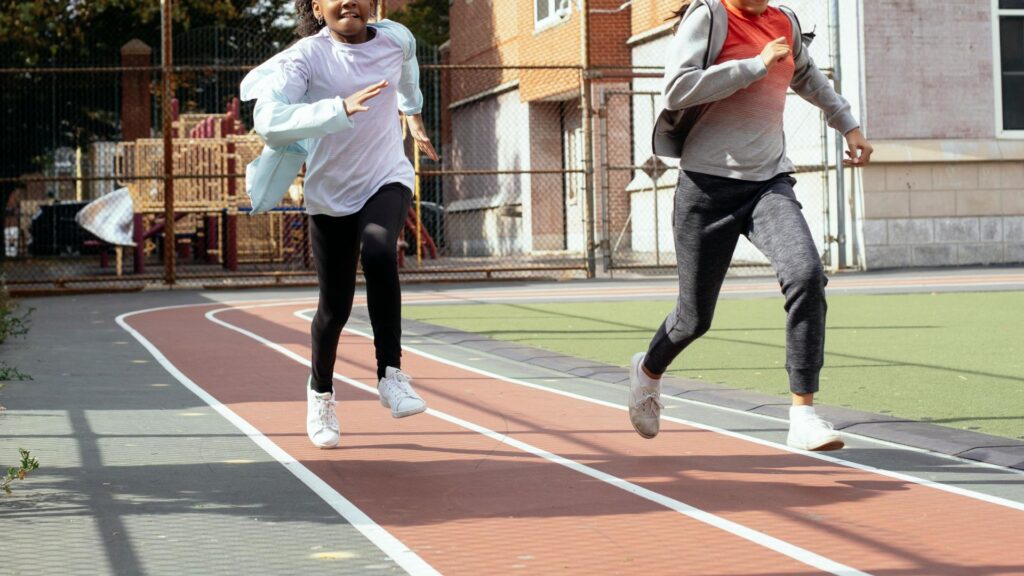
Engaging in sports should evoke feelings of joy and well-being. However, for many adolescent girls, the experience often becomes a source of stress and discomfort. A troubling trend is emerging both in France and internationally: as they grow older, girls gradually withdraw from physical activity.
When the Body Becomes an Obstacle
The onset of puberty brings about significant changes, and the adolescent body can, at times, feel like an uncomfortable battleground. In France, 63% of teenage girls report feeling self-conscious about their appearance, which acts as a major barrier to participating in sports. This issue isn’t limited to France; in the UK, 43% of young girls stop engaging in sports for similar reasons—ranging from body shyness to menstrual concerns and the fear of judgment from peers.
Across the Atlantic, a Canadian study reveals that one in three girls abandons sports by the age of 16. The reasons mirror those found in other regions: physical changes coupled with a lack of inspiring role models and inadequate support systems. These statistics serve as a reminder that the relationship adolescents have with their bodies is a universal issue deserving of care and attention.
Busy Lifestyles Killing the Desire to Move
Beyond body image concerns, time constraints present another significant hurdle. More than half of French adolescent girls (57%) report that their packed schedules leave little room for physical activity. Research from the United States supports this trend: girls from less affluent backgrounds discontinue sports at double the rate of their male counterparts, citing lack of time, access to facilities, and family support.
Late hours, long commutes, and the absence of sports spaces designed for them make engagement in physical activity challenging, if not disheartening. This observation highlights that the barrier to participation is not solely psychological; it is also logistical and social.
The Weight of Others’ Opinions
In locker rooms and on playing fields alike, judgment can be paralyzing. In France, 40% of teenage girls report feeling humiliated by the scrutiny of others. In the UK, this figure rises dramatically to 68%, exacerbated by unrealistic standards portrayed across social media platforms.
In Canada, some young girls opt out of team sports simply to avoid “exposing their bodies” or facing teasing from peers. This social pressure, combined with the fear of others’ perceptions, cultivates an environment where sports shift from being enjoyable to becoming a source of anxiety.
Fatigue and Athletic Burnout
Globally, adolescent girls appear to be following a similar pattern: the increasing demands of academics, social life, and digital engagement leave limited space for sports. When sports are pursued in a competitive manner, they may generate additional stress. Racialized or economically disadvantaged girls face compounded obstacles, further aggravating the dropout rates and impacting their physical and mental health.
Solutions That Inspire Change
In light of these challenges, several promising initiatives are taking shape. The MGEN-Kantar study emphasizes the need for adjusted schedules (between 5 PM and 7 PM), accessible locations, flexible session timings, and compassionate coaching. These ideas find resonance worldwide:
- In Canada, the “She Plays” program offers non-competitive activities focused on enjoyment and self-confidence.
- The UK’s “This Girl Can” initiative helps adolescent girls reconnect with sports without the pressure of performance.
- In Australia, “Girls Make Your Move” aims to reduce dropout rates by promoting inclusivity and visibility in sports.
These initiatives showcase that with attentiveness and adaptability, it is possible to reignite adolescents’ passion for movement, honoring their pace and their bodies.
A Public Health Priority
The disengagement of adolescent girls from sports is not merely a passing trend; it poses significant risks to both physical and mental health. A decline in physical activity leads to increased sedentary lifestyles, heightened risk of overweight, menstrual issues, and heightened anxiety, isolation, and diminished self-esteem. In France, nearly one in two girls ceases all physical activity between the ages of 13 and 18. On a global scale, the WHO estimates that 84% of adolescent girls do not meet the minimum recommended levels of physical activity.
Reviving the joy of movement for adolescent girls is not just about performance; it is a vital public health concern, crucial for well-being and self-esteem. With tailored solutions, we can transform the sporting experience into a positive, accessible, and liberating endeavor for all.
