
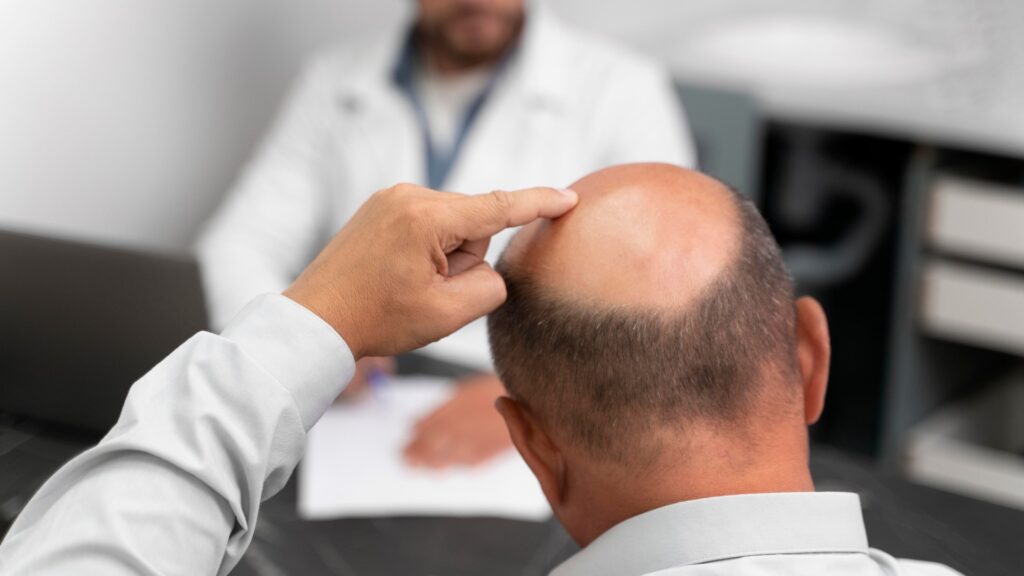
What if hair loss became a public health concern? In South Korea, a presidential proposal is shining a spotlight on baldness. Amid social pressures, mental well-being, and budgetary debates, the topic is as divisive as it is thought-provoking.
A society where appearance carries weight
In South Korea, appearance is far from trivial; it is deeply embedded in social and professional dynamics. According to several studies, nearly 98% of young adults believe that beauty offers genuine social advantages. In this context, premature hair loss can swiftly become a source of discomfort, if not isolation.
Approximately 10 million people are believed to be affected by baldness in the country, in a population of 51 million. This issue particularly impacts young adults, who already face fierce competition when entering the job market. When expectations include being efficient, confident, and “presentable,” every detail of one’s appearance can feel crucial. However, it is essential to acknowledge that all bodies are valid, with or without hair, and a person’s worth is not defined by their hair density.
Expensive treatments and a thriving market
In response to this pressure, the hair care market has expanded significantly. In 2024, it represented nearly 188 billion won (South Korean currency). Specialized shampoos, medicinal treatments, dietary supplements, and hair transplants comprise a flourishing industry, though many of its offerings remain out of reach for those on modest budgets.
Many men, in particular, tend to navigate their baldness in silence. From strategic haircuts and carefully styled hairstyles to discreet surgical interventions, hair loss is often managed behind the scenes. While women encounter intense pressure regarding makeup and body shape, men learn to conceal their thinning hair, sometimes at the cost of significant anxiety.
“A matter of survival”: the statement that sparks controversy
It is within this context that President Lee Jae Myung has urged his government to explore extending public health insurance to cover treatments for hair loss. He asserts that baldness is no longer merely an aesthetic concern, but a genuine “matter of survival” for South Korea’s youth.
This proposition was initially raised during his 2022 presidential campaign and has resurfaced with a central argument: the feelings of alienation among young taxpayers. Many contribute to the health system without being able to access support for an issue that directly impacts their self-esteem, mental health, and sometimes their job prospects.
A measure deemed “populist” by opponents
However, the proposal is far from universally embraced. Conservative figures and health professionals oppose it vehemently. Yoon Hee-sook notably argues that priorities should focus on serious illnesses, such as cancer, rather than baldness. The financial argument is central: the South Korean health system already anticipates a deficit of 4.1 trillion won by 2026.
Conservative media outlets, such as Chosun Ilbo, also criticize the decision as unilateral, made without sufficient consultation with the taxpayer citizens. For them, broadening coverage to include such treatments would pave the way for excessive medicalization of issues deemed non-essential.
A balance between mental well-being and budgetary realities
Health Minister Jeong Eun Kyeong takes a more measured approach. He acknowledges the real impact of hair loss on the confidence and mental health of young adults while emphasizing the need for thorough financial analysis before any decision is made. For underlying the issue of baldness is a broader question: how much priority do we place on psychological well-being within public policy?
Some political figures openly support the measure. Representative Park Joo-min, who publicly admits to having undergone a hair transplant, views this as a way to mitigate stigma and promote a more empathetic society.
A debate that transcends hair
Ultimately, this discussion goes far beyond the issue of hair. It interrogates how society defines health, normalcy, and body acceptance. Taking care of oneself should never be a source of shame, and losing one’s hair should not be perceived as a personal failure.
Whether baldness is covered by health insurance or not, one thing is clear: in South Korea, this topic is no longer taboo. Initiating dialogue is already a step toward greater compassion, body positivity, and respect for all body types.
