
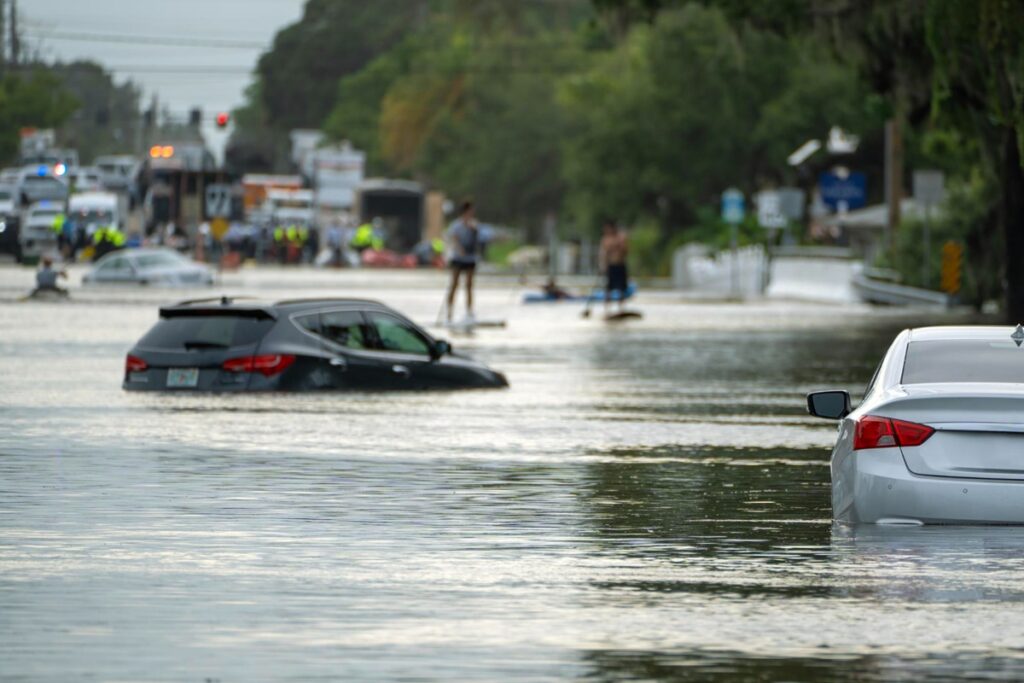
All of the world’s major coastal cities are gradually sinking into the ground. For most of them, complete disappearance seems inevitable within just a few decades.
In a study published in Nature Sustainability, researchers examined 48 major cities affected by subsidence, a phenomenon impacting 20% of the global urban population. Subsidence is the sinking of the Earth’s surface, a major issue that receives very little public attention. It is primarily driven by human activity: the sheer weight of urban infrastructure and the massive extraction of groundwater are the two leading causes.
Why the Earth is Sinking Beneath Our Feet
As coastlines sink, they become even more vulnerable to the risk of marine flooding. While this problem went almost unnoticed 40 years ago, satellite measurements now allow scientists to precisely evaluate land subsidence.
Of the 48 cities studied, researchers discovered that 44 are sinking faster than sea levels are rising. Many of these cities, some of them national capitals, are condemned to disappear within decades if they are among the hardest hit.
Asia Home to Most Threatened Metropolises
Tianjin, China, a city of 14 million people, has the highest subsidence rate in the world, sinking by as much as 1.7 inches (43 mm) per year. In June 2023, massive cracks began appearing in the roads; geologists attributed these fissures to the collapse of underground cavities caused by subsidence. Ho Chi Minh City, Vietnam (9 million inhabitants) follows closely with the second-highest rate at nearly 1.7 inches per year.
Top 10 Coastal Cities Most at Risk of Disappearing First
Chittagong, Bangladesh: Up to 1.45 inches (37 mm)/year (driven by extreme groundwater extraction).
Yangon, Myanmar: Up to 1.22 inches (31 mm)/year.
Jakarta, Indonesia: Up to 1.02 inches (26 mm)/year (the government has already decided to move its capital 600 miles away due to the sinking).
Ahmedabad, India: Up to 0.9 inches (23 mm)/year; a rate increasing rapidly due to unplanned urbanization.
Istanbul, Turkey: Up to 0.75 inches (19 mm)/year; also accelerating due to rapid urban development.
Houston, Texas, USA: Up to 0.67 inches (17 mm)/year, primarily due to oil drilling and water extraction.
Lagos, Nigeria: Up to 0.67 inches (17 mm)/year, driven by sand mining.
Manila, Philippines: Up to 0.67 inches (17 mm)/year.
