
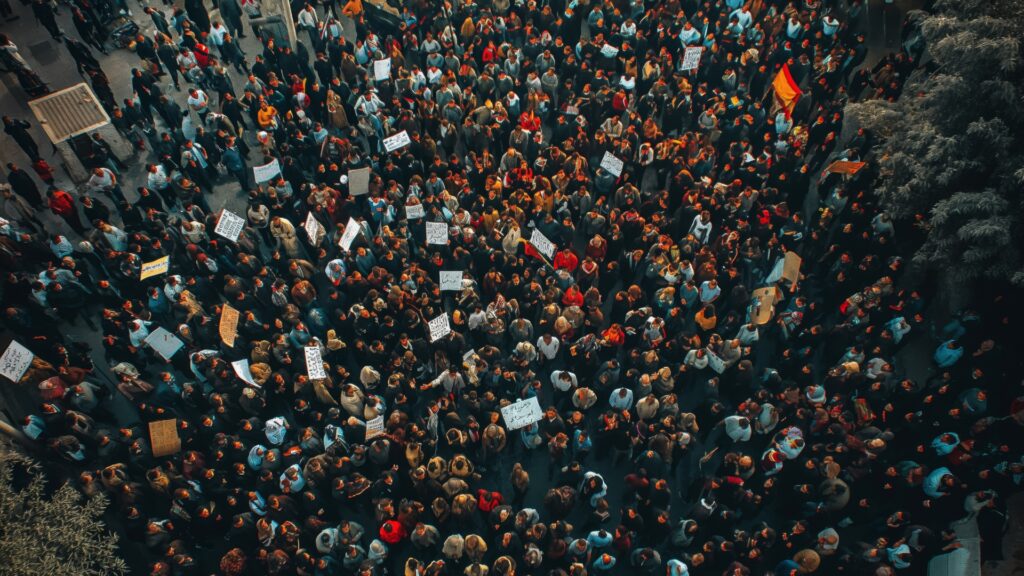
The ongoing protests in Iran, which began in late 2025, have transcended mere economic grievances, morphing into a comprehensive challenge against the regime. These demonstrations, initially sparked by frustrations over rising costs of living, now articulate demands for fundamental rights, a systemic overhaul, and have seen the emergence of slogans openly critical of the ruling authorities.
From Economic Hardship to Political Uprising
Initially, many gatherings took root in bazaars and shopping districts amidst rampant inflation, currency devaluation, and escalating difficulties in meeting basic needs. The shuttering of shops and subsequent strikes were soon joined by students, workers, and residents from medium-sized and peripheral towns, broadening the movement far beyond Tehran.
In numerous cities, slogans evolved swiftly: beyond criticism of the economic crisis, protesters began targeting the Supreme Leader and the Islamic Republic itself, a clear indication of the profound erosion of political trust.
Demands for Freedoms from Protesters
The demands now extend beyond mere concerns over salaries and prices. Protesters are calling for freedom of expression, the right to peaceful assembly, an end to systematic repression and censorship, alongside an independent judiciary. Many videos and testimonies reveal calls to “end the Islamic Republic” and to establish a system where citizens can genuinely elect their leaders.
The protests are also spotlighting discrimination and inequality, with marginalized regions and ethnic minorities decrying the lack of equal rights and the specific repression they face.
Repression, Surveillance, and the Divide with Society
In response to this unrest, authorities have intensified the presence of security forces, employing tear gas and, in some instances, live ammunition, leading to hundreds of arrests, according to human rights organizations. Judicial officials have warned that participating in “illegal gatherings” or calling for protests will be “severely punished,” underscoring the regime’s prioritization of security over public freedoms.
Simultaneously, increased internet access restrictions and heightened surveillance of social media reveal that controlling information remains a central objective for the regime. Nevertheless, images of protests, anti-government slogans, and funerals morphing into rallies continue to circulate, illustrating a significant rift between the leaders and society.
A Diverse Movement: Between Republic and Monarchy
The protest movement is not monolithic: some demonstrators demand a secular or pluralistic democratic republic, while others advocate for a return to monarchy, particularly rallying around the figure of Reza Pahlavi, son of the last Shah. Slogans calling for his restoration have been heard in various cities, alongside anti-Supreme Leader chants and broader critiques of the ruling elite.
This debate regarding political future signifies that the movement is not merely rejecting the status quo; it is also sparking an ideological battle over what type of regime could succeed the Islamic Republic.
Manouchehr Bakhtiari: A Face of the Protest Movement
In this context, figures from past protests have emerged as powerful symbols, including Manouchehr Bakhtiari, the father of Pouya Bakhtiari, a young engineer who vanished during the 2019 protests. Condemned by the regime, he speaks out against repression, family pressures, and calls for unity among Iranians to achieve regime change, even supporting the public return of the monarchy.
His journey exemplifies the human cost of political engagement in Iran and represents, to many, the continuity between past uprisings and current mobilizations calling for justice, dignity, and freedom.
Analysis from media and experts converge on a singular point: while the economic crisis triggered the protests, at their core lies a deep crisis of legitimacy of the regime. With fatalities during demonstrations, mass arrests, and an ever-widening gap between the populace’s expectations and governmental responses, the movement highlights a profound demand for political transformation that extends well beyond economic concerns.
