
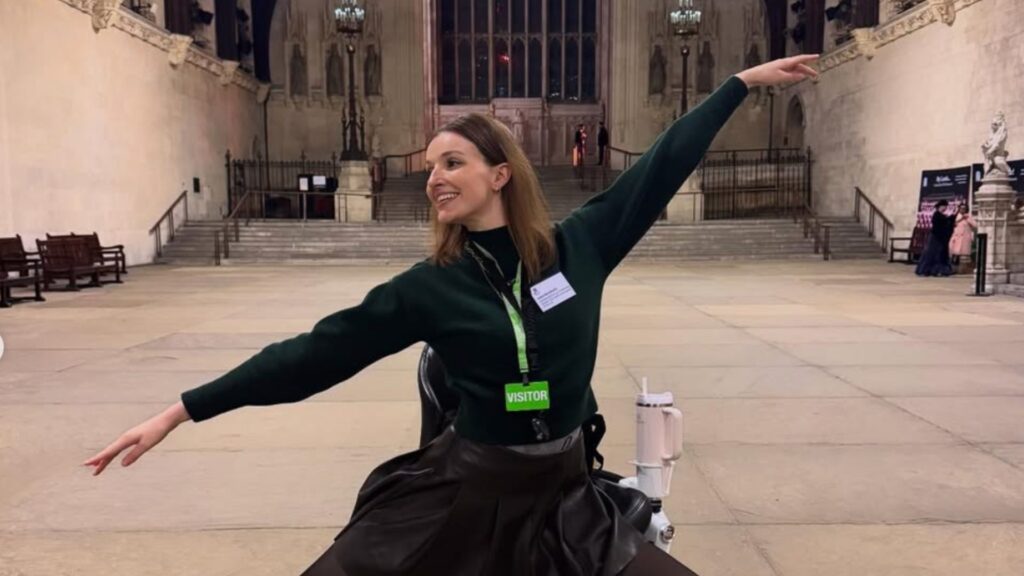
Kate Stanforth (@katestanforth) exemplifies the idea that dreams can evolve without ever truly disappearing. After being forced to abandon her aspiration of becoming a professional ballet dancer due to a chronic illness at just 14 years old, she discovered new ways to embrace her passion and redefine the limits of dance.
A Childhood Defined by Ballet Passion
For Kate Stanforth, dance has always been a core part of her identity. She was introduced to ballet at the tender age of two, and it quickly became a consuming passion. By eight, she had entered a pre-professional program with a singular goal: to become a ballerina. Over the next decade, she dedicated herself to intense training, envisioning a future on stage with prestigious companies like the Royal Ballet and Rambert. Her dream appeared to be taking shape, fueled by years of hard work, discipline, and determination.
A Chronic Illness Alters Her Path
At 14, as she seemed on the brink of achieving her dreams, everything changed. Kate began experiencing the first signs of myalgic encephalomyelitis (ME), commonly known as chronic fatigue syndrome. This complex neurological condition brings about profound and lasting exhaustion, along with numerous other symptoms that can severely limit daily activities.
For this young dancer, the impact was difficult to accept: she had to stop ballet. Initially, she believed this pause would be temporary. However, as time passed, it became clear to Kate that her envisioned career as a professional ballerina would not resume in the same manner.
Mourning a Dream to Reimagine Oneself
For several years, Kate navigated a journey of personal reconstruction. Dance, once a source of joy and fulfillment, became a painful reminder of what she had lost. She shares that discussing her experience was challenging, as the loss of this integral part of her identity was hard to bear. However, as her health began to stabilize, Kate opted to reconnect with her passion through a different lens.
She found a new path by sharing her knowledge as a dance teacher. This transition allowed her to re-engage with her art while establishing a different relationship with the discipline that had shaped her life. Dance transformed from a definitive goal into a means of expression, connection, and personal growth.
A New Approach to Dance and Challenging Norms
Her journey took on new significance when she discovered wheelchair dance. This approach enabled her to continue exploring movement and envision a ballet that embraces diversity, where every body finds its place. Today, as a qualified ballet instructor, Kate Stanforth (@katestanforth) collaborates with esteemed institutions such as Matthew Bourne’s New Adventures, the Royal Ballet, and the Rambert Dance Company.
Additionally, she is involved in various projects related to fashion and television, contributing to London Fashion Week and productions aired by the BBC, ITV, and Channel 4. Her journey illustrates that dance transcends the limits of physical appearance or a perfect performance; it can embody creativity, adaptability, and self-confidence.
View this post on Instagram
Advocating for a More Inclusive Dance Community
Despite her experiences, Kate Stanforth observes that barriers still exist for artists with disabilities, particularly in classical ballet. She notes that disabled dancers often feel they must prove their legitimacy more than their able-bodied counterparts to be recognized as true artists.
For Kate Stanforth (@katestanforth), accessibility does not diminish artistic standards. On the contrary, it can enrich the discipline by introducing new perspectives. She advocates for greater accessibility in training, improved representation of disabled dancers, and equitable opportunities within professional companies.
Even after overcoming immense challenges, Kate Stanforth retains a steadfast ambition: to one day return to the stage and perform ballet professionally. Her story serves as a powerful reminder that dreams do not necessarily vanish when life takes a detour; they can transform, take on new forms, and emerge even more resilient.
