
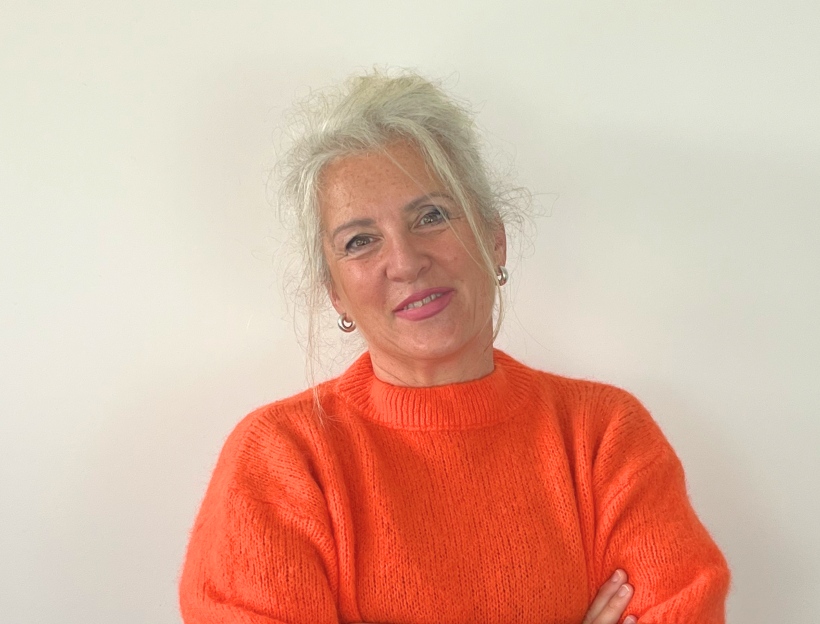
In the collective imagination, hypnosis often boils down to putting an audience to sleep on command and controlling their actions like marionettes. However, medical hypnosis bears no resemblance to the dubious spectacles seen on entertainment shows. Christine Chalut-Natal Morin, a midwife who has dedicated her career to women’s well-being, aims to demystify this practice, making it a genuine reference point in women’s intimate lives. This is especially important for those grappling with the tumultuous changes of menopause, who may feel as if their bodies are escaping them. Below, you will find an opportunity to explore Christine’s empathetic approach further.
Medical hypnosis: far from the spectacle image
With a soothing voice that naturally evokes tranquility, Christine Chalut-Natal Morin—an experienced midwife and doctor in psychology—offers her own definition of hypnosis. It contrasts significantly with the depictions found in improvised TV shows. This healthcare professional, who first recognized her altruistic calling in her middle school guidance counselor’s office, has continuously diversified her training to support women’s physical and mental health, creating a powerful synergy between the two.
She expanded her initial education by studying psychology and acquiring basic skills in acupuncture. At the age of 52, driven by her field experience, she returned to school to study hypnosis, addressing a real need: helping women tap into their inner strengths.
As she clarifies, the hypnosis she practices is no caricature. It’s neither black magic nor sorcery; it’s an invaluable power of the mind. This multidisciplinary specialist, who has made the well-being of women her life’s mission, expresses her regret over the misleading representations of hypnosis that undermine its therapeutic potential.
Self-hypnosis: learning to take charge of your well-being
She clarifies a clinical truth: “The first uses of hypnosis in medicine were on the battlefield for emergency amputations. But this was overshadowed by the advent of general anesthesia,” she explains.
Christine also highlights the usefulness of hypnosis in supportive care, particularly in oncology and for managing pain in cancer patients. This is far removed from the borderline methods associated with staged performances. In her view, hypnosis provides access to “a vast reservoir of resources,” which can be invaluable as the body undergoes transformation, especially during menopause.
“In hypnosis, we aim to change what bothers us. It’s a more proactive stance,” she emphasizes. Unlike meditation, which invites a focus on acceptance of one’s current reality, hypnosis taps into our inherent capabilities—often hidden—to address issues directly at their source.
Thus, during a session, women navigating this pivotal phase of their cycle, who experience hot flashes, might feel a refreshing breeze caress their face as if a fan were circulating air around them. With the launch of the Lune d’Elles application, what was once a medical privilege is now accessible to all women with just a few clicks.
An app to make the practice more accessible
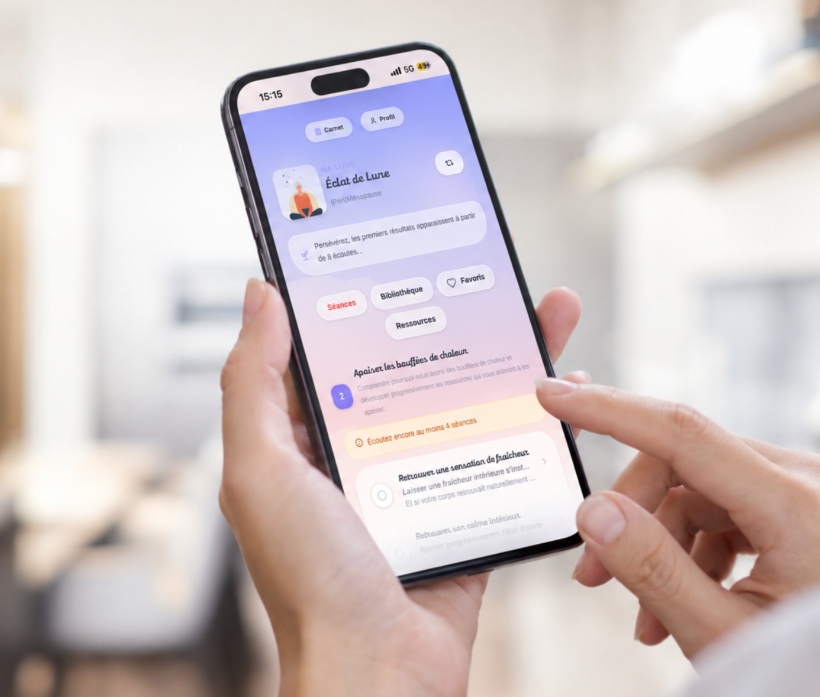
No need to wait for a distant appointment to experience well-being and discover the benefits of hypnosis. Lune d’Elles represents the culmination of Christine’s work and the logical progression of her vocation: to enable women to access this tool and engage with their bodies more serenely. Designed to cater to women’s needs at various stages of life— including pregnancy and fertility treatments, pregnancy, and (peri)menopause—Lune d’Elles has recently introduced its first section dedicated to (peri)menopause. This application transcends the role of merely being a “dashboard” for tracking menopause fluctuations or a virtual “health diary.”
It serves as an enlightening guide through the murky waters of menopause, a thoughtfully crafted pocket companion with attention to detail—from color choices to the illustrated figure and the auditory experience—aimed at supporting women in their personal evolution. While women are often reassured that symptoms will eventually pass and that patience is required, many endure significant psychological distress. Recognizing that the experiences and needs surrounding menopause are still vastly underrepresented, Lune d’Elles does not pretend to replace medical care.
Lune d’Elles reflects Christine’s seriousness and expertise while avoiding the look of a formal platform. In fact, the app has been honed with input from beta testers who are at various stages of their menopause journey. Practically, Lune d’Elles offers audio content of approximately fifteen minutes where Christine’s captivating voice guides users deep into their subconscious. It serves as an introduction to self-hypnosis intended to evolve into a daily ritual, an everlasting practice.
Confidence, mental clarity… a tool that has proven its worth
You don’t need to be a master at letting go to practice self-hypnosis. Even those who overthink, analyze everything, or struggle to silence their inner voice can benefit. There are no “good students” or performance benchmarks to reach; the goal is simply to learn to shift your perspective and take a different mental path.
“The unconscious is a vast reservoir of resources,” Christine reminds us. Self-hypnosis invites us to tap into this inner library, composed of experiences, learnings, and sometimes unsuspected abilities. Through repeated sessions, the aim is to become adept at recognizing what is at play and mobilizing the tools best suited to the moment’s needs. Christine emphasizes the importance of repetition: self-hypnosis is meant to be practiced independently and regularly, allowing certain reflexes to become more familiar over time.
This embodies the philosophy of Lune d’Elles. Be it hot flashes, disturbed sleep, stress, or self-esteem issues, the application does not promise to erase the upheavals of menopause but to offer another perspective from which to navigate them. It’s a way to shift from “What is happening to me?” to “What can I do with what is happening to me?”
And it never seeks to replace care: “We do not replace medical support, we do not replace psychological support: Lune d’Elles is a supplement,” insists Christine. Therefore, Lune d’Elles is an invaluable addition to your smartphone, encouraging a fresh perspective on menopause—not as an end, but as a rebirth. Readers of The Body Optimist: discover your exclusive Lune d’Elles® offer.
Partner article
