
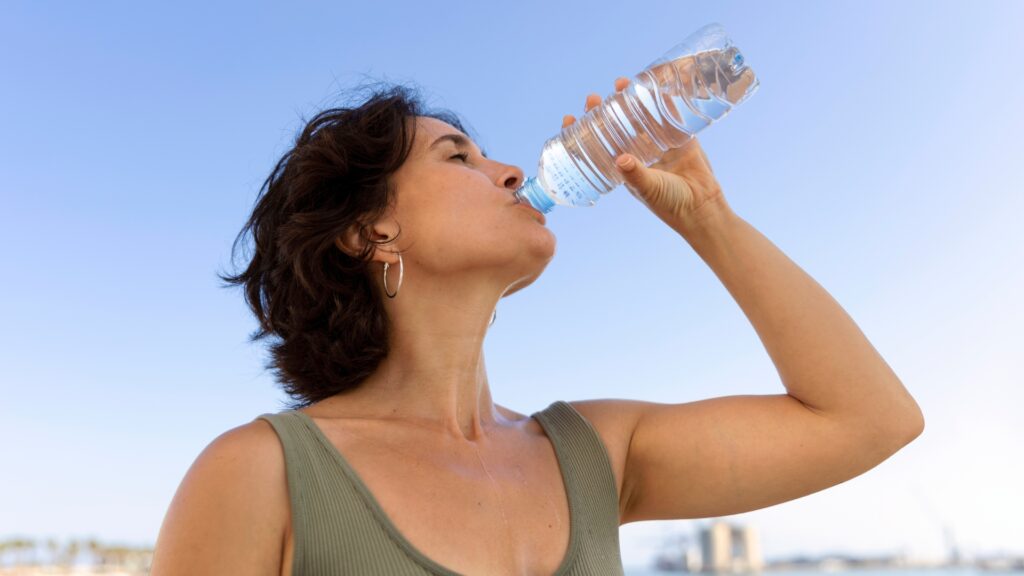
Water is fundamental for the optimal functioning of our bodies. However, many of us fall short in our daily intake, often without realizing it. Insufficient hydration can manifest through a range of signs, some of which may come as a surprise. Here’s how to identify if your body might be craving more water.
Thirst and urine color
The first and most obvious sign is thirst. But be cautious: when you feel thirsty, your body is already experiencing a slight water deficit. Another reliable indicator is the color of your urine. Dark urine, leaning towards amber yellow, typically indicates insufficient hydration, while clear urine suggests a healthy level of hydration. This simple metric is easy to monitor daily.
Fatigue, headaches, and difficulty concentrating
Other, subtler symptoms can also serve as warning signs. Fatigue, headaches, and difficulty focusing are often linked to inadequate water intake. A study published in The Journal of Nutrition, conducted by Lawrence Armstrong and his team, highlighted this connection. Researchers found that even mild dehydration—around 1.4% of body weight—could diminish mood, increase feelings of fatigue and headaches, and impair concentration in healthy young women. In essence, even a minor deficiency can lead to tangible effects.
Dry skin and a parched mouth
The lack of hydration can also be reflected in your skin. Tight, dry, or less elastic skin may indicate insufficient water intake. Similarly, a dry mouth, chapped lips, or an ongoing sensation of thirst are all red flags. These signs, often attributed to other causes, deserve your attention.
Dizziness or feelings of weakness
In some cases, a more pronounced deficit can lead to dizziness, a sense of weakness, or difficulty engaging in physical activity. These symptoms should prompt immediate hydration, especially during hot weather or when engaging in strenuous exercise.
How to hydrate effectively
To avoid these discomforts, it’s wise to drink regularly throughout the day, without waiting for thirst to strike. Keeping a water bottle close at hand, varying your beverage choices with herbal teas or flavored waters, and consuming water-rich fruits and vegetables are all effective strategies. However, hydration needs can vary based on age, activity level, and climate.
Thirst, dark urine, fatigue, headaches, or dry skin: these signs may indicate that you’re not drinking enough water. By learning to recognize these signals and adopting the habit of regular hydration, you can maintain your energy, focus, and overall well-being on a daily basis.
