
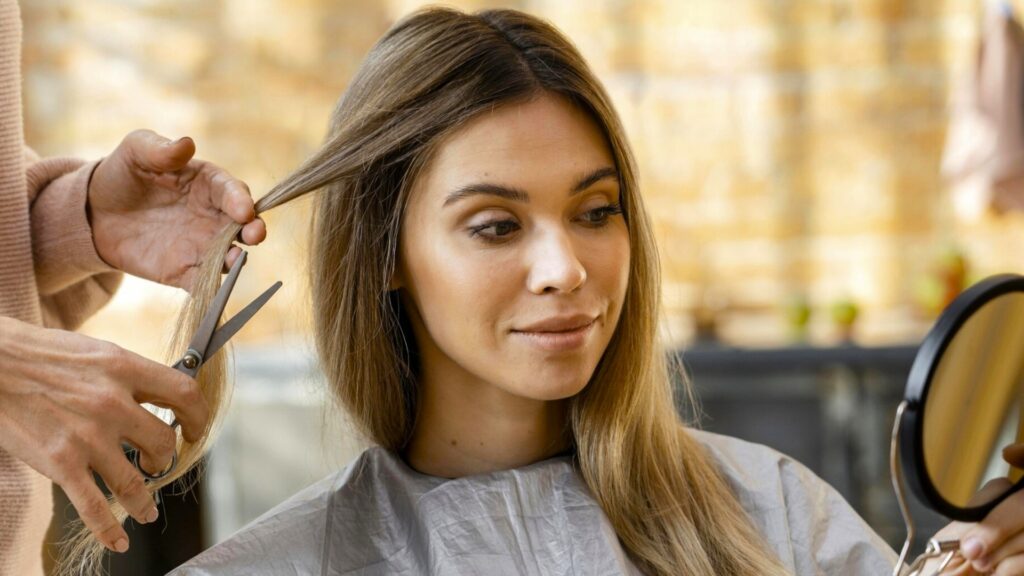
Stepping into a hair salon can sometimes lead to an unexpected surprise when it comes time to settle the bill. For what appears to be similar services, women often find themselves paying significantly more than men. So, what accounts for this pricing disparity? Let’s delve into this still prevalent practice.
Enduring Price Disparities
The consumer association CLCV conducted a study examining prices in 902 hair salons across France. The findings are striking: a package that includes shampoo, haircut, and styling averages €20.46 for men, compared to €30.07 for women—an approximate 47% difference. Even more surprising, among all the establishments surveyed, only one offered unisex pricing, calculated solely on time spent and products used, without differentiation between male and female clients.
Hair Length Isn’t the Only Factor
Many professionals argue that longer hair requires more time, skill, and products, justifying higher rates. However, this rationale does not always align with actual pricing structures.
For instance, the investigation mentions a salon where a short haircut for a woman is priced at €69, whereas a man pays €34, regardless of his hair length. A long ‘female’ haircut is priced at €72, resulting in only a marginal increase. This implies that pricing often seems more influenced by the gender label on the menu than by the specific service provided.
A Legal Practice That Raises Questions
In France, hair salons have the liberty to set their own prices, provided that they are clearly displayed. Thus, charging different rates for women and men is not illegal. However, the CLCV points out another concern: over one in five salons failed to properly display their prices visibly outside. Without this information, consumers struggle to compare costs prior to sitting in the stylist’s chair.
Salons Changing the Game
An increasing number of establishments today are adopting a different model. Rather than differentiating costs based on gender, they set prices according to tangible criteria such as hair length, time required for the service, or the amount of products used. This approach is often regarded as clearer and allows for a more inclusive welcome, eliminating the need to choose between “female” or “male” categories.
A Question Worth Asking
If you find that your short haircut seems overpriced, don’t hesitate to inquire about what justifies the rate. Factors such as time spent, techniques employed, or specific treatments may explain the costs, but these details should be communicated clearly.
Ultimately, the price differences observed in many salons appear to be rooted in long-established commercial practices. However, this trend is gradually shifting as clients seek fairer, more transparent pricing based purely on the actual services rendered.
