
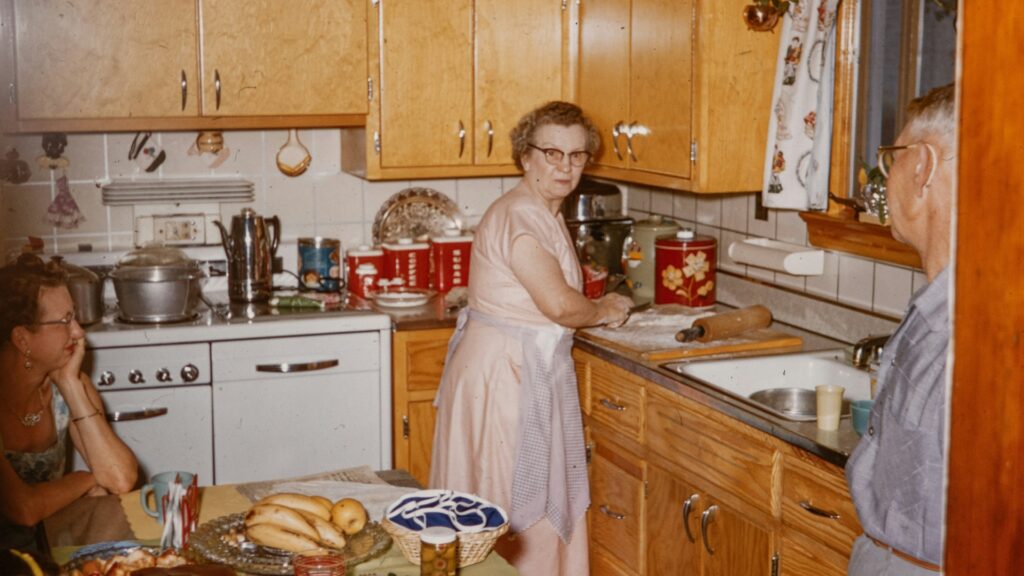
Women often juggle busy schedules filled with significant family responsibilities while performing unpaid work that goes largely unrecognized. Stay-at-home mothers serve multiple roles, acting as secretaries, caregivers, housekeepers, and chefs. Despite their extensive dedication, this work remains unaccounted for, leading to the unfortunate reality that many do not qualify for a pension upon retirement.
The Invisible Work That Counts Less in Retirement
Retirement is a dream for many who are still in the workforce, but it also raises concerns. Many women worry about not having enough. Gender disparities in retirement benefits are stark; women often find themselves at a disadvantage. Those who have paused their careers to raise children must catch up on lost time, resulting in pensions that are significantly less favorable than their male counterparts.
According to statistics, women receive an average retirement income that is 28% lower than men’s. This disparity arises from a combination of factors, including career choices that lead to lower-paying tertiary sector jobs, persistent salary inequalities, and varying lengths of maternity leave. Stay-at-home mothers face a dual challenge, often existing in a kind of blind spot—almost “off the grid.”
Even after years spent managing household responsibilities, preparing lunches for the entire family, and supporting children through milestones, women in this role often lack recognition. The saying “every job deserves a salary” seems to fall short when it comes to domestic work, as tasks like laundry, vacuuming, and diaper changing are often regarded as acts of service rather than legitimate employment. However, in France, stay-at-home mothers are not explicitly barred from retirement benefits; they merely access these benefits differently than traditional employees.
The Potential Retirement Benefits for Stay-at-Home Mothers
The website Ma retraite en clair outlines the rights of these often-overlooked women. Simply registering with France Travail can validate up to six trimesters of retirement. However, this does not contribute meaningfully to their retirement income. Where stay-at-home mothers can benefit is by applying for the “assurance vieillesse des parents au foyer” (AVPF), which allows the family allowance fund (CAF) to cover their retirement contributions.
This affiliation entails certain requirements, including receiving family supplements—specifically for families with at least three children—or caring for a child or adult with a permanent disability of at least 80%. Without retirement contributions, a conventional pension is typically unattainable. Nevertheless, stay-at-home mothers can qualify for the minimum old-age benefit (ASPA) based on income criteria, which translates to approximately €1,043 gross per month for individuals and €1,620 gross for couples in 2026.
What If Stay-at-Home Mothers Received a Salary?
Historically, the role of a stay-at-home mother was often imposed rather than chosen; however, today, it represents a personal decision for many. Beyond the controversial “tradwives” on social media, who perpetuate certain traditional ideals, there are mothers who wish to devote their time to their children’s education and growth. Often dubbed “household fairies,” they are not merely binge-watching shows like Desperate Housewives while ironing shirts; they multitask as budget managers, educators, homework helpers, and more. One could easily fill a page with their diverse skills and responsibilities.
According to the Insee, the domestic work commonly dismissed as trivial could equate to nearly 34 hours of labor weekly. In a utopian world—sadly not a reality—stay-at-home mothers could potentially earn between €50,000 and €60,000 annually, comparable to professionals in finance. This estimation derives from aggregating the average salaries of each role typically fulfilled by these women.
The dialogue surrounding whether stay-at-home mothers should receive compensation in retirement goes beyond numbers. It challenges our collective valuation of care, education, and domestic management—critical roles that continue to be overshadowed by what society deems “productive” careers.
