
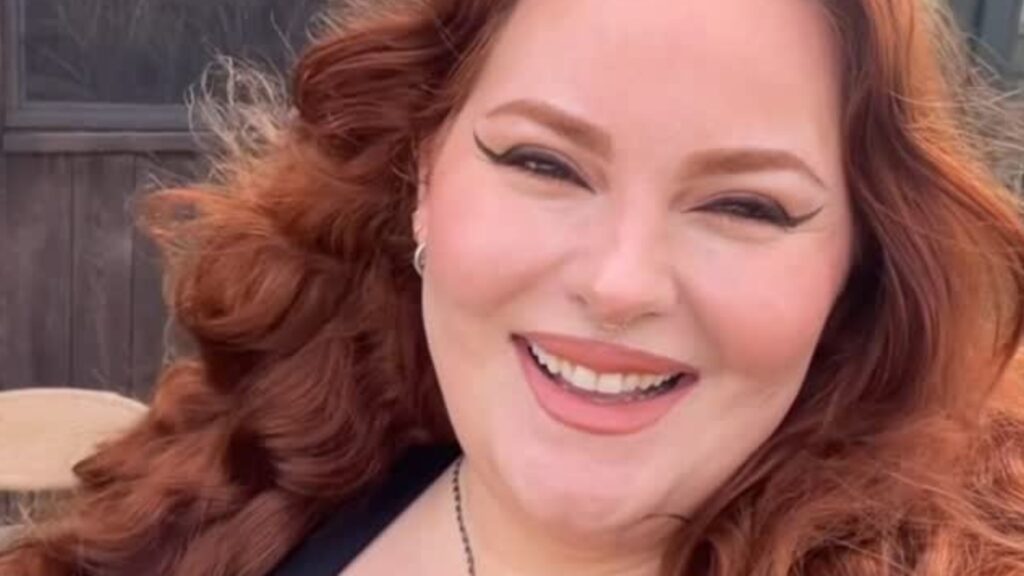
Even in 2026, weight-related prejudices remain deeply entrenched. American plus-size model Tess Holliday recently highlighted this issue by sharing an experience that resonated with many on TikTok: her life insurance application was denied due to her weight. This candid revelation reignites the discussion surrounding size discrimination and the criteria used in certain sectors.
A decision she viewed as unjust
In a TikTok video, Tess Holliday shared that she was deemed ineligible for life insurance in the United States. With a tone blending humor and exasperation, she explained that she believed she fit the profile they were looking for: a non-smoker, non-drinker, with no known health issues. Yet, according to her, one factor shifted the outcome dramatically: her weight.
The model, standing at 5’3″ and weighing over 300 pounds, emphasized that she exercises daily, takes no medication, and has no pre-existing health conditions. For her, this situation reflects a broader issue: an outdated, stereotypical view of bodies prevalent in certain health and insurance sectors.
The debate around BMI reignited
This incident also sheds light on a frequently criticized measure: the body mass index (BMI). Still widely used to assess health risks in medical and insurance contexts, BMI is increasingly contested by many experts. Numerous studies point out that it fails to consider vital factors such as physical fitness, muscle mass, lifestyle, and an individual’s overall health.
Research published in 2024 revealed that a large majority of individuals with obesity reported experiencing judgment, shame, or stigma in medical settings. For body-positive advocates, the issue transcends mere numerical metrics; it fundamentally concerns society’s perception of “non-normative” bodies and how certain institutions automatically associate “higher weight with poor health.”
An advocate for years
Tess Holliday has long been a prominent figure in the body-positive movement. In 2013, she launched the hashtag #EffYourBeautyStandards to challenge unrealistic beauty ideals and promote a more diverse representation of bodies. More than a decade later, she believes the fight remains as crucial as ever. In February 2026, she officially relaunched the movement, underscoring that many individuals are still treated as if their bodies are a “problem to be fixed.”
She frequently discusses the discriminatory comments and behaviors she faces daily. In 2025, she publicly condemned an inappropriate remark from a United Airlines flight attendant suggesting she “lose weight” for her child during a flight.
A broader reality behind these testimonies
Tess Holliday’s testimony extends far beyond her personal experience. Countless individuals with larger bodies report facing service refusals, intrusive comments, medical judgments, and unsolicited criticism regularly. This situation reminds us of an important truth: a person’s weight does not define their worth, lifestyle choices, or overall health. Bodies are diverse, and every individual deserves to be treated with respect, regardless of appearance.
Moreover, it is crucial to emphasize that there is no single correct way to inhabit one’s body. Some may seek to lose weight, while others may not; each person should have the freedom to make their choices free from judgment or discrimination.
Through her latest commentary, Tess Holliday ultimately brings to light a pressing question: why does physical appearance continue to dictate access to certain rights and services?
