
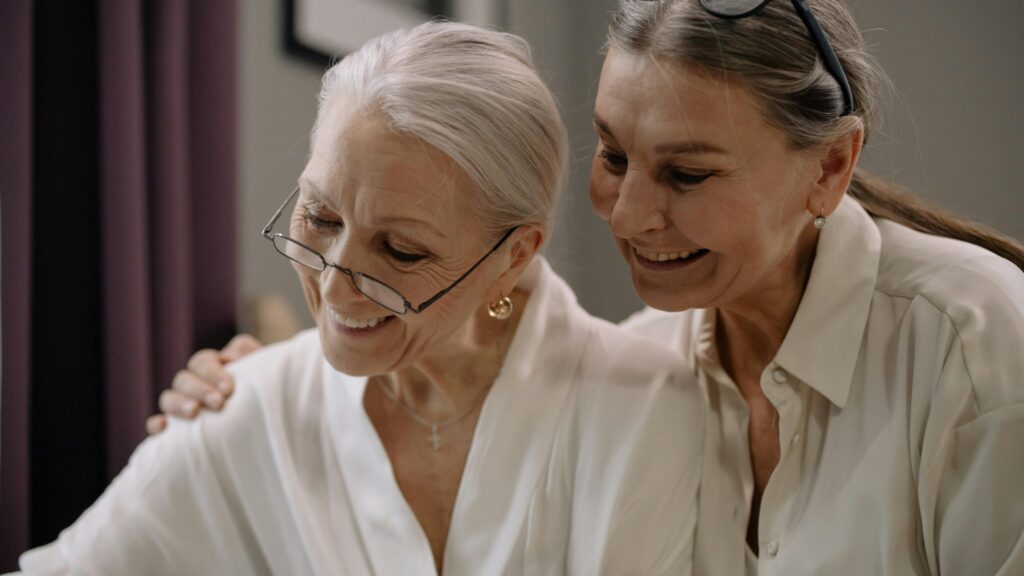
Increasing numbers of women today are opting to share their retirement through co-housing arrangements. This choice blends independence with social engagement, creating a more fulfilling daily life. Though still a relatively nascent trend, this way of living is gaining momentum and redefines how we experience our later years.
Living Together to Combat Isolation
The isolation of older adults is a well-documented concern, particularly among women who tend to live longer and often find themselves alone following the loss of a partner. In this context, shared living emerges as a practical and uplifting solution.
Sociological research highlights that living collectively minimizes feelings of loneliness and fosters daily interactions. Studies on participatory housing illustrate that this living arrangement naturally encourages mutual support, spontaneous exchanges, and a sense of security, while still respecting each resident’s personal space. The concept is simple yet soothing: having a home without the burden of isolation.
An Alternative Between Independence and Collective Structure
Senior co-housing strikes a balance between two traditional models: living alone at home or moving into a specialized facility. It offers a more flexible and often more appealing third option.
This type of living arrangement enables individuals to maintain their private space while sharing communal areas. Meals, activities, and some responsibilities can be shared, easing the daily grind and fostering connections. Certain setups may include shared services, simplifying life without imposing rigidity. This model is particularly appealing because it allows individuals to remain active participants in their daily lives, all within a vibrant and inspiring environment.
The Babayagas: A Pioneering and Inspiring Project
In France, one of the most notable examples of this movement is the Maison des Babayagas, located in Montreuil. Conceived by Thérèse Clerc, this residence for retired women was built on a powerful idea: to age together while retaining personal autonomy.
The residents share much more than just a roof; they organize their lives around three core principles: self-management, solidarity, and civic engagement. Each woman plays an active role in the community and the collective decision-making process. This project transcends mere co-housing. It embodies a dynamic and joyful way of experiencing retirement, where every woman retains her individuality while contributing to a shared vision.
View this post on Instagram
Why This Model Resonates Particularly with Women
Several factors explain the growing appeal of such collective living arrangements. Women tend to live longer, often have modest retirement incomes, and are more vulnerable to loneliness.
Historically, similar models have existed, such as beguinages, where women lived together in a spirit of mutual aid and community. Contemporary senior co-housing is a modern adaptation of these concepts, addressing current social challenges. Most importantly, they provide a vital opportunity to choose one’s living environment and the individuals with whom to share it.
Tangible Benefits for Daily Life
Studies on shared living highlight several positive effects. Economically, pooling certain expenses leads to cost savings. Practically, it simplifies access to various services and reduces daily constraints.
From a health perspective, public health research underscores an essential point: social isolation can have detrimental effects on overall well-being. Conversely, maintaining regular interactions and an active social environment contributes significantly to improved quality of life and mental health. While not a medical solution, senior co-housing serves as a factor that enhances overall well-being.
A Trend Poised for Growth
As the population ages, these models are garnering increasing attention from public authorities and housing stakeholders. Inclusive housing, which encompasses these co-living arrangements, is now perceived as a forward-looking response. It reimagines aging not as withdrawal but as a continuation of active, social, and intentional living.
Living Together, but on Their Own Terms
A core aspect of these initiatives is the emphasis on freedom. Residents choose their housemates, establish communal living rules, and organize their daily routines according to their desires. Some ventures, like the Babayagas, go a step further with collective management of the space. This autonomy enhances the feeling of being fully engaged in one’s environment.
Ultimately, these experiences transform retirement from merely a restful phase into an opportunity for connection, sharing, and collaborative projects. Senior co-housing, propelled by pioneering initiatives, offers a fresh vision: a vibrant, chosen, and profoundly human experience of aging—where the term “together” takes on its fullest meaning.
