
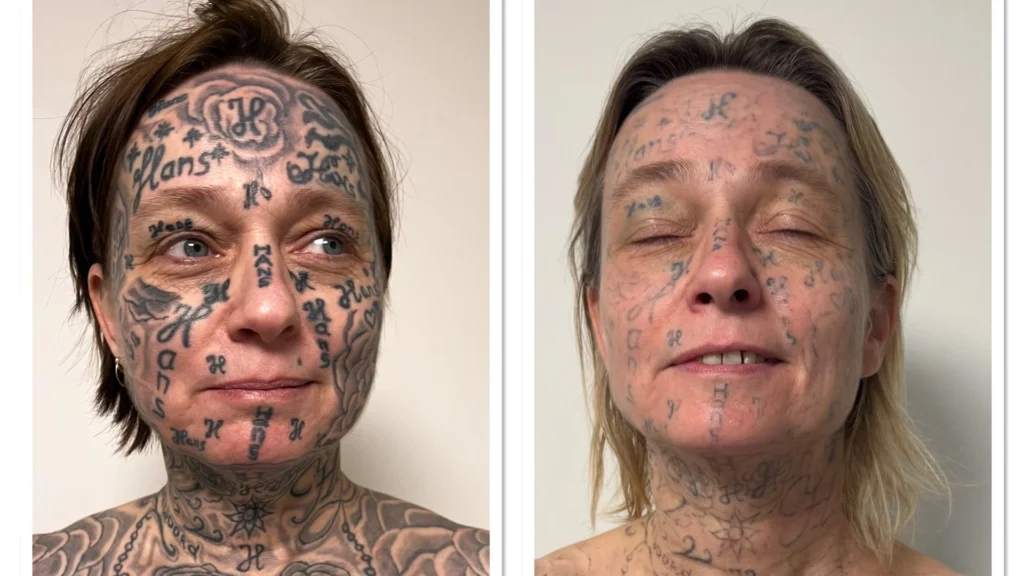
A Dutch woman has come forward, claiming her former partner coerced her into getting his name tattooed on her body more than 200 times. Her story is part of a campaign aimed at raising awareness about psychological violence in intimate relationships.
Over 200 Tattoos Imposed During a Destructive Relationship
The woman, referred to as Joke, states that her ex-partner forced her to endure over 200 tattoos featuring his name or initials on various parts of her body throughout their toxic relationship. According to reports from Dutch media, the tattoos were applied using equipment purchased online, all within a context of emotional manipulation and psychological pressure. The foundation Spijt van Tattoo reveals that Joke lived in an atmosphere of fear and humiliation for years.
A Campaign to Raise Awareness About Psychological Violence
Joke’s experience highlights a broader awareness campaign launched by the Spijt van Tattoo foundation, which supports individuals seeking to erase tattoos tied to traumatic experiences. The campaign, titled “Uit je hart, uit je huid” (“From your heart to your skin”), aims to raise funds for tattoo removal procedures.
The foundation notes that some women may be tattooed against their will or within contexts of emotional manipulation, leading to lasting psychological scars. Experts point out that certain forms of domestic violence can include mechanisms of control over a person’s body and image.


A Multi-Year Journey Towards Removal
Joke has received support from the Spijt van Tattoo foundation for approximately three years to gradually remove the tattoos. This extensive process involved several professionals, including laser tattoo removal specialists and medical and artistic experts. While the majority of the tattoos have been successfully removed, some residual marks may remain. Tattoo removal procedures typically require multiple sessions spaced out over time to allow the skin to heal.
The Issue of Domestic Violence
Support organizations for victims emphasize that physical or psychological coercion can manifest in various forms within abusive relationships. According to the World Health Organization, domestic violence can encompass acts that aim to exert control over an individual’s body or appearance. Awareness campaigns are crucial in encouraging victims to seek help and in educating the public about these situations.
Ultimately, the campaign led by the Spijt van Tattoo foundation seeks to shed light on a relatively unknown issue. By elevating personal testimonies, the organization aims to foster recognition of psychological violence and advocate for access to appropriate support services. Advocacy groups stress the importance of establishing support structures for individuals facing such challenging circumstances.
