
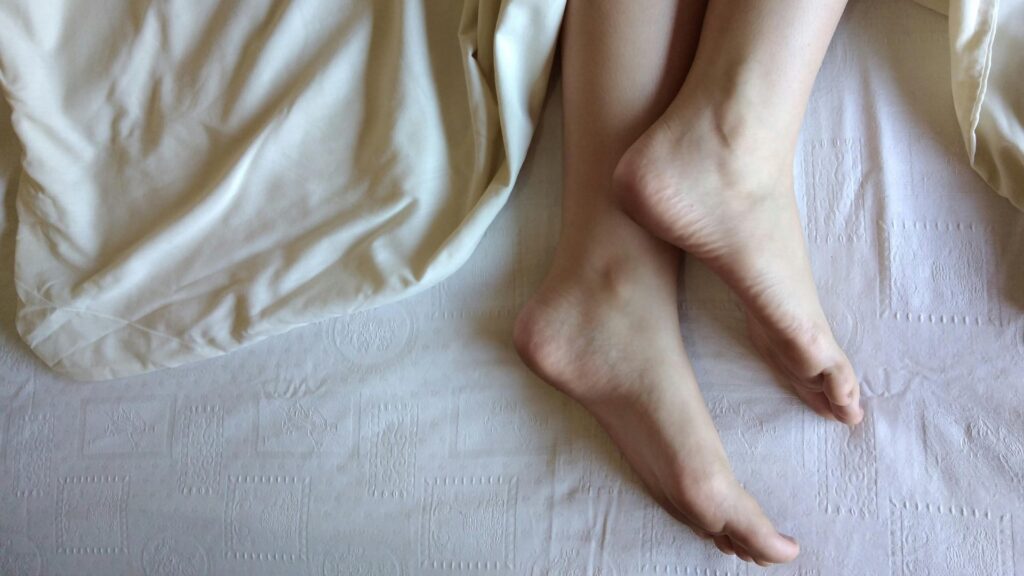
A detail often overlooked can revolutionize your nights: lowering your body temperature is essential for triggering sleep. Simply letting one foot peek out from under the covers creates this natural cooling effect, explaining why this popular tip truly works.
Cooling Down: The Key Signal for Sleep
Your core body temperature naturally drops by 1 to 1.5°C in the evening, a process managed by the hypothalamus that prepares the brain for rest. This rapid decline activates the slow-wave NREM sleep neurons and slows down nerve impulses, aiding the onset of sleep. Studies confirm that people tend to fall asleep precisely when their internal temperature is decreasing most rapidly, often around 10 PM or 2 PM for a nap.
Bare Feet: Radiators of Heat
Your feet are packed with blood vessels close to the skin, which dilate upon contact with cooler air, effectively releasing body heat. Even a small amount of exposure can enhance this thermolysis, particularly for those who sweat at night. This peripheral vasodilation lowers the temperature of the trunk and brain, creating the ideal balance of “warm extremities, cool center” for a quick descent into sleep.
A Cool Bedroom and Even Cooler Feet
Maintaining a room temperature between 16-19°C optimizes this mechanism. If it’s too warm (>25°C), the body struggles to cool down, disrupting deep sleep. Allowing a foot to escape the covers compensates for a warm environment without air conditioning or a fan. Hot nights already reduce REM sleep by 20 minutes; this simple trick can help counteract that effect.
Proven Effects, Not Just Placebo
Research involving 44 volunteers demonstrates that a thermal drop always precedes the sensation of fatigue, validating its direct impact on NREM and REM cycles. The brain regenerates better at 35-36°C, flushing out toxins such as beta-amyloid linked to Alzheimer’s.
Implementing the Tip Daily
- Evening routine: Take a warm bath 90 minutes before bedtime to initiate thermal decline.
- Light bedding: Use a thin comforter with one foot free, avoiding forced air conditioning.
- Avoid: Heavy meals and screens that raise internal temperature.
In summary, this micro-adaptation leverages the physiology of sleep without any fancy gadgets: often, simply having one foot exposed can lead to a quicker descent into slumber, saving you 10-15 minutes.
