
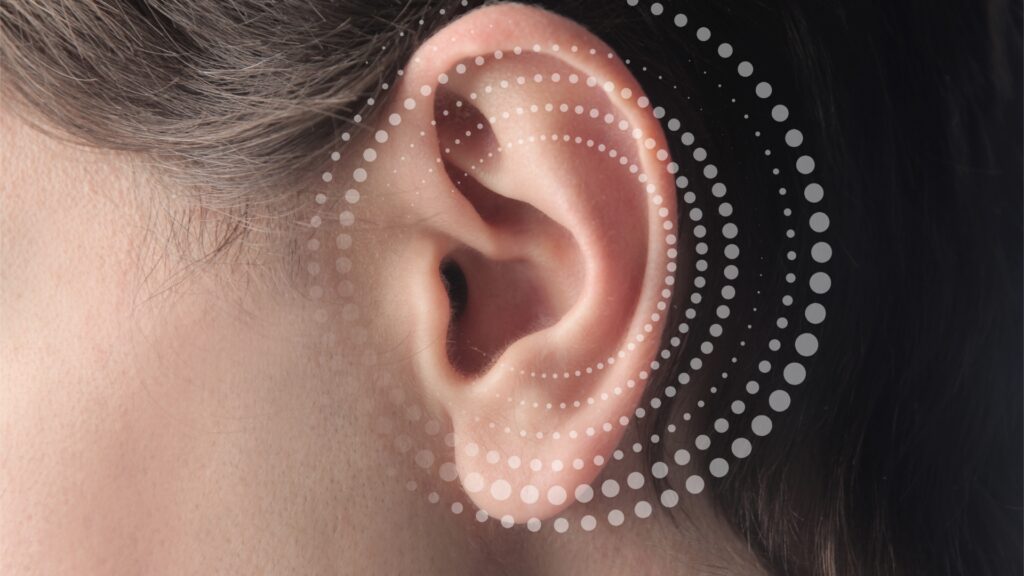
Voluntary ear movement is one of those subtle yet fascinating abilities that only a few possess. Surprisingly, this talent appears to be more prevalent among men than women. What lies behind this seemingly innocuous movement is a captivating story that intertwines evolution, neuroscience, and the untapped potential of the human body.
A vestige of our ancestors… still very much alive
If you can wiggle your ears, even just a little, you are activating a reflex handed down from our primate ancestors. For monkeys, cats, and dogs, this motion serves the purpose of directing the ear to a sound, allowing them to pinpoint its origin or anticipate danger. In the wild, possessing this ability was a significant advantage for survival.
In modern humans, however, this reflex has largely lost its original function. The three muscles responsible—the anterior, superior, and posterior auricular muscles—have become mainly unused. Nonetheless, some individuals can still activate them with ease. Scientists estimate that only a small percentage of people possess this skill, though they cannot precisely explain why it is roughly three times more common in men than in women.
A muscular curiosity… or a clue about your brain?
This gesture may not simply be an amusing curiosity. Research suggests it could reflect a form of enhanced neuroplasticity. In essence, individuals capable of wiggling their ears may have brains that are better equipped to maintain, restructure, or reactivate certain neural connections.
Some studies go even further, proposing that this ability might be linked to improved cognitive resilience following a stroke or trauma. Consequently, this discreet movement could serve as an indicator of mental flexibility, adaptability, and recovery potential. It’s a remarkable demonstration of the capabilities of both your body and brain, often without your conscious awareness.
A feat of motor coordination
Wiggling your ears is not as easy as it seems. It demands precise coordination between your brain and muscles that most people rarely use voluntarily. To make them move, you must activate all three muscles simultaneously, without relying on the movements of your face or neck.
This isn’t merely an anatomical issue—everyone has these muscles—but rather a matter of neuronal connection. In some individuals, this connection remains active, while in others, it has simply gone dormant without disappearing entirely. This is encouraging news for those who enjoy gently challenging their physical abilities.
Good news: You can learn it
Contrary to popular belief, this talent isn’t reserved for a “genetic elite.” It’s entirely possible to awaken these dormant muscles. By standing in front of a mirror and focusing on the temporal region while trying to provoke even the slightest quiver, you can begin to reactivate this ancestral movement.
The key lies in patience, bodily awareness, and repetition. Every micro-movement counts. And even if you can’t wiggle your ears like a keenly attentive cat, you are still stimulating your physical awareness, coordination, and brain-muscle connection. What a rewarding practice for your body, mind, and confidence in your abilities!
In summary, while wiggling your ears might not turn you into a superhero, this simple gesture beautifully illustrates the hidden richness of your body. It reminds us that we are much more than what we use on a daily basis, that our brains are filled with unexplored neural pathways, and that our bodies deserve to be celebrated in all their complexities.
