
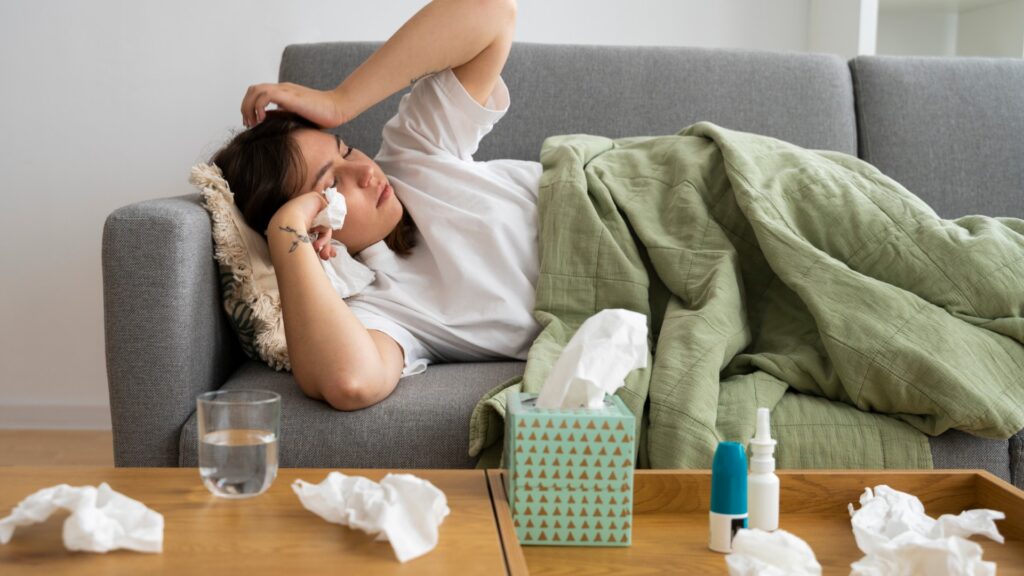
After spending a significant portion of your winter sneezing, sniffling, and battling a relentless cough, you may find yourself emerging from illness with a heightened sense of vigilance. With the fear of a relapse looming over you, it’s as though you’ve adopted obsessive habits akin to those of Monk. You see germs everywhere and dread the prospect of facing that incapacitating cold again. This could be a variation of health anxiety.
Health Anxiety: A Common Concern
This year, germs have left little room for reprieve. You just endured a particularly grueling flu season, marked by chills, fever, and invasive symptoms. You’ve played the trumpet with your nose all winter long, coughed until you nearly lost consciousness, and grappled with these internal invaders. Despite layered clothing, a cozy scarf, repeated doses of immunity boosters, and impeccable hygiene practices, you still succumbed to the season’s viruses.
Unfortunate luck, perhaps. Yet now that you’re feeling better, thoughts of the worst-case scenarios plague your mind. You fear reliving those scenes of lethargy, your head buried in vaporizers and Vicks Vaporub. You might even find yourself secretly wishing for sterile suits and latex gloves to become all the rage.
This year, the flu doesn’t hold back. It is not a minor cold that dissipates quickly but a virulent strain that leaves you bedridden and feeling like a vegetable. It’s no wonder if you’re teetering on the edge of anxiety. Healthcare professionals describe this phenomenon as health anxiety, a derivative of hypochondria. You may not be in a state of full-blown phobia, but any scratch in your throat or wave of fatigue sends you spiraling into worry.
Recognizing the Symptoms
Have you ever found yourself checking your throat for swollen glands or examining your reflection for imaginary symptoms? These tendencies are likely indicators of health anxiety. Daily check-ups become routine, and you may find yourself turning to the internet for reassurance. If your prized possession is a blood pressure monitor and you reach for the thermometer at the first sign of discomfort, you might be grappling with this modern malaise.
“It varies from person to person and depends on the specific health concern causing the most distress,” explains Dr. Spelman, a psychologist and clinical director at the Private Therapy Clinic. How can you determine if your anxiety has crossed into unreasonable territory? Here are some common signs exhibited by those dealing with health anxiety:
- Obsession with physical signs: Paying excessive attention to minor sensations, such as a slight discomfort, a changing mole, or an elevated heart rate.
- Compulsive seeking of answers: Googling symptoms, endlessly reading medical articles, or scrutinizing every fluctuation in your health.
- Repeated checks: Measuring your pulse, taking your temperature, or monitoring your blood pressure more often than necessary.
- Constant need for reassurance: Calling loved ones, consulting doctors, or seeking health certificates to calm your mind.
- Persistent fears despite reassuring results: Continuing to worry even after a medical examination indicates everything is fine.
What Fuels Health Anxiety?
As the expert notes, health anxiety — now recognized in medical terminology — has intensified during the height of the COVID-19 crisis. Since the era of surgical masks, hand sanitizers, and social distancing, it has taken on a nearly chronic nature. The constant stream of alarming news that dramatizes every disease, continuously reminds us of rising cancer rates, and creates an illusion of impending doom does nothing to alleviate this mental burden. Even if news stories don’t directly pertain to your health, they can elevate your internal stress levels.
Having unlimited medical resources at your fingertips may initially seem reassuring—until you stumble across the worst possible scenario. A search for symptoms can spiral into alarming hypotheses, particularly for those predisposed to expect the worst. Frequently consulting your doctor in the hopes of resolving ailments existing only in your mind is not the best approach. Dr. Spelman recommends adopting a comprehensive strategy: cognitive-behavioral therapy (CBT). While it won’t cure what’s invisible, it will help detoxify your dark thoughts and wean you off harmful beliefs.
If you panic at the mere hint of a cough as if it were life-threatening, you are experiencing health anxiety. Fortunately, with the right strategies, you can break this vicious cycle. The aim isn’t to neglect your well-being or sever ties with your doctor, but rather to keep your fears in check.
