
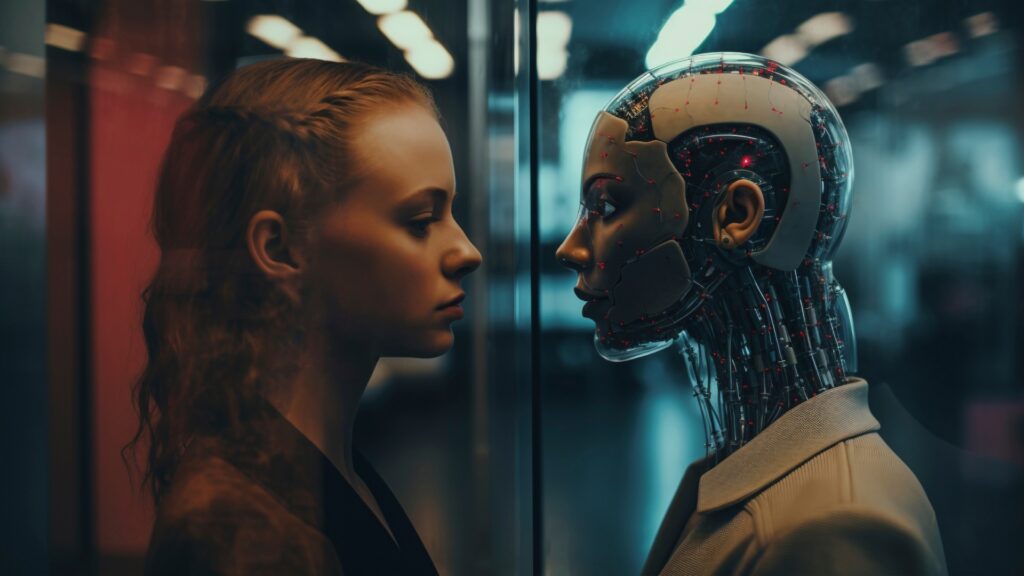
In an era where job seekers harness artificial intelligence (AI) to refine their resumes, gather presentation tips, or perfect a cover letter, companies are increasingly turning to these digital tools to filter applications and select their next hires. While AI may be taking on the role of human resources (HR), it often lacks the objectivity and sensitivity required in such a critical process.
A 2.0 Recruitment Approach Captivating More Businesses
AI has permeated our daily lives, often enhancing our chances of landing a job. Perhaps you’ve already turned to ChatGPT during your job search, saving some mental effort by seeking assistance with various tasks. Whether it’s rephrasing an email, streamlining a cover letter, or practicing for tricky interview questions, AI acts as your personal coach and trusty assistant.
If you’ve ever found yourself struggling to write even a single paragraph on your own, you’ll understand that business leaders are also capitalizing on this obedient and efficient workforce to recruit fresh talent. Faced with staffing shortages or time constraints, employers often delegate this crucial task to emotionless robots. They go beyond simply ranking resumes by relevance; they are taking on the full scope of HR responsibilities.
Imagine progressing through several interview stages only to reach the pivotal moment of a virtual exchange on your screen. You click the link sent via email, and before you appears a face made of pixels—a woman crafted from algorithms, rather than flesh and blood. You find yourself interacting with a robot as if it were a real person. This scenario, once fictional, is rapidly becoming a reality. For instance, the French startup HR Engine claims its corporate AI system saves recruiters “two days of work.” While that might seem efficient, it comes at the cost of human connection.
From Resume Screening to Interviews, AI Holds Significant Power
This AI meticulously scans resumes and scrutinizes every line, offering what resembles a professional diagnosis. It’s not merely a helpful tool; it has become the conductor of the recruitment orchestra. Whether making initial contact or judging practical scenarios, it feels like a scene from a live-action “Black Mirror” episode.
This machine, devoid of any understanding of intuition, generates psychological profiles of each candidate. It’s charged with evaluating candidates based on various criteria. The creators of these robots assure us that AI focuses exclusively on skills. They are programmed to recruit not based on looks or gender, but on qualifications—a notion intended to promote neutrality. This is an intriguing approach to mitigate nepotism and bias in hiring decisions.
The Concerns Surrounding AI in Recruitment
These AI systems, tamed by major corporations, hold your future in their algorithms—an unsettling thought given the scandals that have emerged. Issues like data exploitation, photo trafficking, and biased analysis highlight the risks associated with AI, opening the door to potential abuses and inequalities.
Instead of addressing the silent injustices within the professional realm, AI may inadvertently normalize them. “To make selections, AI uses the data it has been fed. If men have historically filled these roles, it will inadvertently conclude that men are more competent and favor male candidates,” warns Marie Content, a social law attorney at BG2V, in an interview with Les Echos.
A 2020 study by Apec (French Association for Executive Employment) emphasized the importance of using AI thoughtfully and judiciously. “Artificial intelligence should only serve as a supplementary tool for occasionally handling the most tedious tasks; it can never be considered infallible,” it stated—a reminder that AI has its limitations in the recruitment process.
Ultimately, AI, which lacks any sensitivity to your eloquence or love for language, prioritizes your qualifications over your essence. In other words, don’t expect to be someone’s “perfect match.” Why not envision a world where you could have a virtual clone capable of promoting your merits on camera?
