
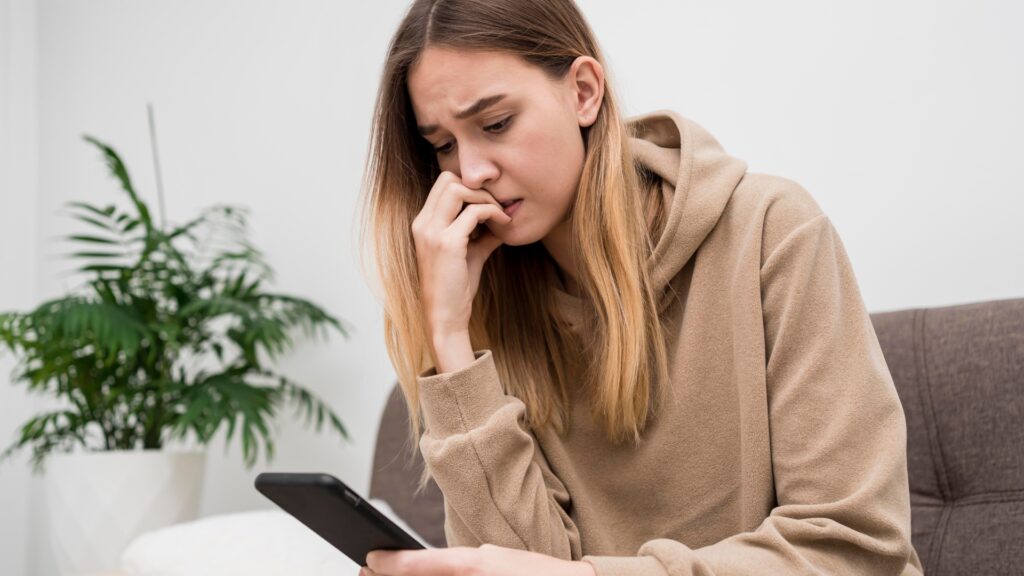
You share a photo, you smile, and suddenly, that image slips away from you. Over the past few weeks, social media—especially X (formerly Twitter)—has become a platform for a collective outrage. Women, both well-known and anonymous, are recounting a chilling experience: their public images are being manipulated to create intimate visuals they never consented to, all thanks to AI.
Intimate Deepfakes Created in a Few Clicks
The mechanics are as simple as they are terrifying. Using a selfie, a professional portrait, or even an innocuous vacation photo, accessible AI tools produce images where the body is artificially undraped. The faces are often recognizable, the proportions realistic, and the result is uncanny. It creates the illusion of a “credible” nudity, despite being entirely fabricated.
The targets are diverse: high-profile influencers, journalists, content creators, and also women without any significant media presence. In other words, no online footprint is “too small” to be affected. The common thread? Real, diverse, normal bodies that become inadvertent canvases for digital fantasies.
View this post on Instagram
When Violence is Minimised
In response to these allegations, some male reactions shock with their flippancy: “You post photos, you have to accept it.” This dangerous reasoning inverts responsibility. Posting an image has never meant relinquishing consent, dignity, or control over one’s body—whether it is slender, full-figured, muscular, marked by life, or simply human.
This rhetoric contributes to a culture where violation is excused, even justified. Women do not seek invisibility; they demand respect. They remind us that every body deserves consideration, whether exposed or not, and that technology does not create any additional rights to exploitation.
Real Consequences for “Fake” Images
The issue does not stop at the screen. Many individuals cannot distinguish between an AI-generated image and an authentic photo. Once spread, these creations can lead to:
- Severe infringements on privacy: harassment, blackmail, widespread uncontrolled distribution.
- Professional repercussions: challenges to credibility, damage to reputation, particularly in still highly regulated fields.
- Deep psychological suffering: anxiety, unwarranted shame, loss of confidence, feelings of powerlessness.
The cruelest aspect? Having to justify oneself for something one has never done. Repeating, “That is not me in that photo,” while knowing some may doubt it regardless.
Platforms and Laws Lagging Behind
Social media platforms struggle to effectively moderate this content. Reporting processes are slow, removals inconsistent, and detection tools are often outpaced by the rapid dissemination of images. On the legal front, defamation laws or rights to image do not always cover these new uses of AI, leaving victims in an exhausting state of uncertainty. However, the issue is clear: protecting digital integrity is as essential as protecting physical integrity. A body, even if represented artificially, remains tied to a real person.
Reclaiming Control and Changing Perspectives
This scandal highlights a pressing ethical urgency. Without safeguards, AI amplifies existing violence. Women should not have to hide, self-censor, or withdraw from public spaces to feel safe.
The message is clear and powerful: Your bodies are legitimate, beautiful in their diversity, and they belong to you. Technology must adapt to human respect, never the other way around. It is time for this truth to become a rule—both online and offline.
