
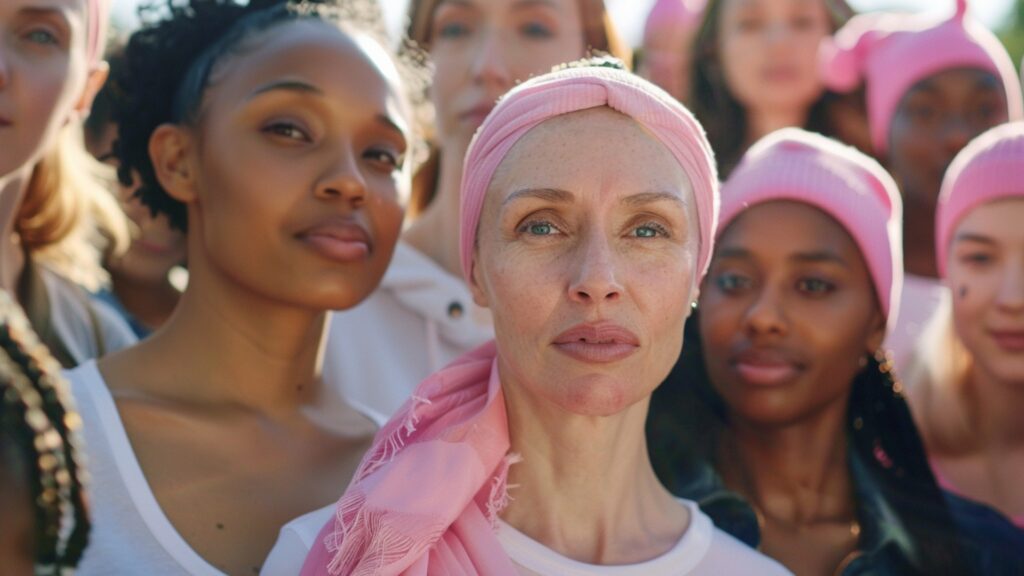
After an arduous medical journey marked by repeated treatments and a fierce battle against illness, women are finally seeing a glimmer of hope. While remission may not equate to a full recovery, it represents a rebirth. To celebrate this “good news” and to reclaim their bodies, which bear the marks of their struggle, fourteen women hopped on their bicycles—not for a leisurely ride but for a challenging 100 km journey. This symbolic athletic adventure is a first step toward reconciliation with their bodies.
100 Km on Bikes to Celebrate Remission
In France, breast cancer affects over 61,000 women each year. Thanks to advancements in medical science and more precise examinations, this once-deadly disease is now more manageable. According to the Gustave Roussy Institute, 9 out of 10 women diagnosed with breast cancer can expect to either recover or enter remission when caught early and treated promptly.
Remission is not a complete victory over the disease, as it can resurface unexpectedly. Instead, it is a flicker of hope—a positive note following the darkness of diagnosis. These women, whose lives hung in suspense throughout their treatment, ensure that this milestone is celebrated memorably. Some host gatherings with friends; others find joy in this medical milestone by gripping handlebars instead of cake.
This wild challenge was initiated by Anne-Sophie Knab-Ley, a physiotherapist specializing in senology, who invited her patients in remission to take part. Facing initial hesitation and discouragement, she ultimately rallied these fighters for this athletic journey, quickly transforming it into a reflective adventure, a quest for a second chance. Remarkably, some of these women had never ridden a bike before. Aged between 32 and 50, they set out on the roads of Alsace, traversing a route that connected Strasbourg to Wissembourg over 100 km.
See this post on Instagram
Five Months of Training to Prepare
If someone had told these women that just months after their treatment, they would mount bikes to navigate the hilly terrain of Alsace and conquer a 100 km course, they would not have believed it for a second. Among them were those who had never even mastered the art of pedaling.
What makes their achievement even more impressive is that just a year ago, some of these women were battling hair loss and were still attending painful infusion sessions, navigating the complexities of catheters. So, they approached this life-affirming challenge cautiously, determined not to rush their bodies, which had already endured so much. Guided by professional coach Claudine Lecestre, president of the Strasbourg Cycling Club, they eased back into cycling.
The goal was never to win a medal but to reclaim self-esteem. These breast cancer survivors didn’t ride for glory; they participated to remind themselves of their capabilities and to fully inhabit their bodies once again. This was a fresh start—a chance to rebuild their self-image and embrace their silhouettes anew.
A Triumph Over Illness and Embracing Pride
In interviews with Ici Alsace, the participants expressed a unanimous sentiment of achievement, self-affirmation, and personal satisfaction—feelings they had almost forgotten since cancer became an unwelcome part of their lives. The disease strips away certainties, diminishes self-esteem, and complicates the relationship with oneself.
Completing that 100 km bike ride, wearing out their sneakers on the pedals, feeling the wind in their hair, and experiencing the freedom and team spirit was transformative. For them, it was a way to rediscover their bodies from a new angle, viewing them as allies rather than as hosting grounds for an illness or as adversaries.
When Sports Become a Part of Recovery
This initiative, undertaken with smiles and determination, serves as a testament to resilience. More than just a 100 km bike ride, it represents a personal achievement and a return to life. For these fourteen women, there was no intention to set records, push their bodies to extremes, or strive for performance—but simply to glide down hills in camaraderie, filling their narratives with love instead of grief. They faced far greater trials than mere cramps or steep climbs.
This story brings to mind the Dragon Boat races, a sport that engages the arms rather than the legs, and serves as a reminder that physical activity goes beyond weight loss. Particularly in the context of recovery, the true benefits of sport are often overlooked. “A patient who engages in 30 minutes of physical activity six days a week reduces her risk of recurrence by 44%,” shares the architect behind this cycling challenge in conversation with the Dernières Nouvelles d’Alsace.
While cycling won’t cure cancer, it can certainly help these women embrace life after treatment. After months spent undergoing procedures and navigating medical appointments, they are gradually rediscovering a newfound sense of freedom.
